JAFITA works with elevator companies, distributors, project organizations and specialist suppliers. These relationships do not all follow the same model. A distributor develops a market and supports local customers. An OEM partner needs a repeatable product definition and controlled brand presentation. A contractor needs coordinated technical interfaces and a clear delivery scope. A supplier must meet product, document and quality requirements.
Treating all of these relationships as a general request to “become an agent” creates ambiguity. JAFITA therefore begins with four questions: who is the customer, what equipment or service is involved, which market or project is in scope, and who is responsible at each stage?
The result is a partnership structure built around real work rather than a logo exchange.
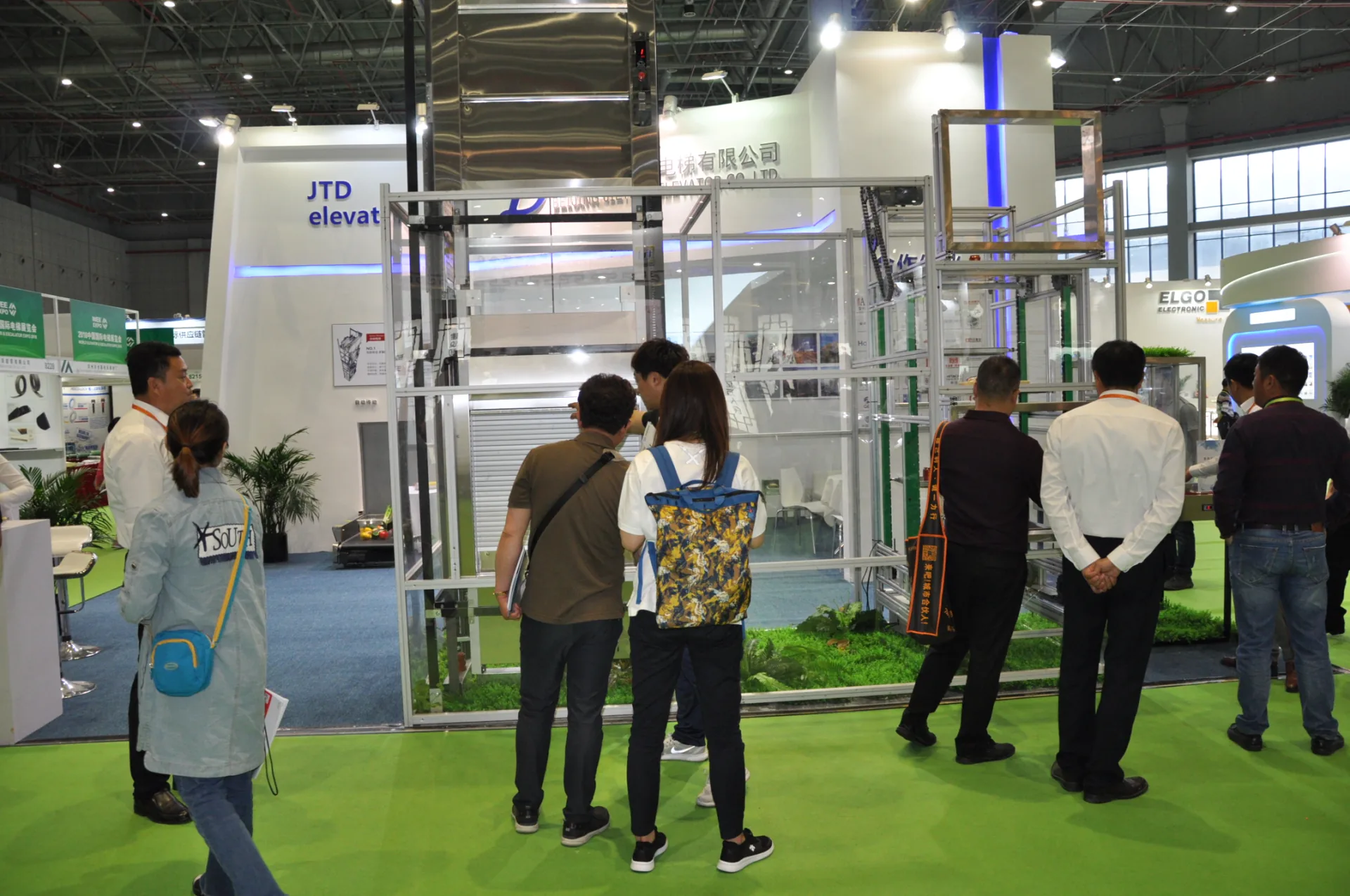
An equipment discussion · Company exhibition archive
The Business Behind the Partnership Model
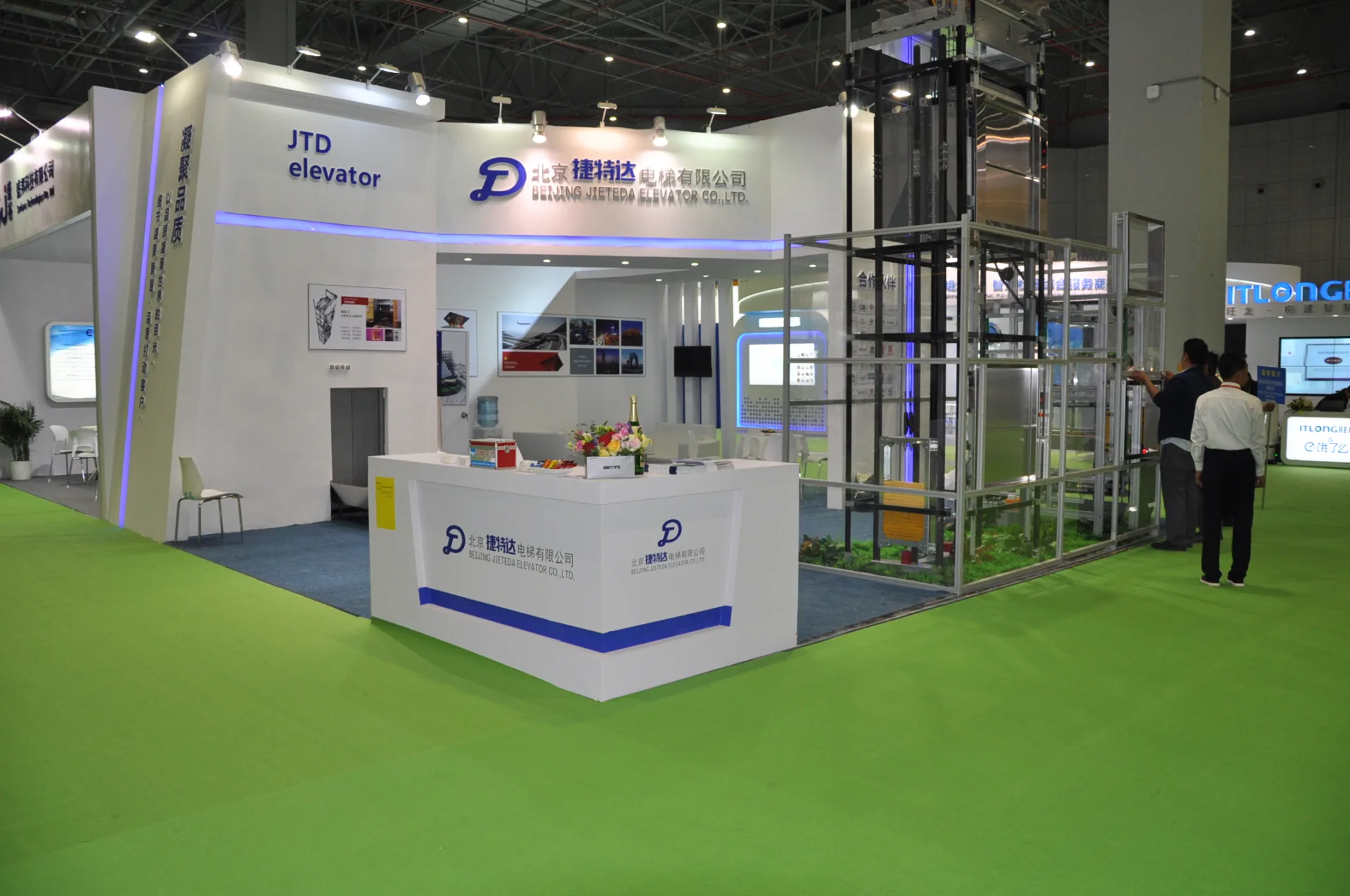
Freight and goods-lift presentation · Historical company archive
Beijing Jieteda Elevator Co., Ltd. was established in Beijing in 2001. Company records describe freight-elevator production as a core strength and identify long-term OEM work as an important part of its development. The company began export business in 2008 and built an international team around technical communication, supply coordination and overseas delivery.
That history shapes how JAFITA approaches cooperation today. The company does not present every elevator category as if it came from one identical manufacturing route. Freight and OEM experience form the manufacturing foundation. Other elevators, escalators, moving walks and components may involve specialist factories selected for the relevant product and project. A serious partnership should make that supply route, product identity and division of responsibility clear.
JAFITA’s company materials also refer to historical cooperation and industry relationships with recognized elevator businesses. Any named relationship must be described according to its documented period and scope. A past OEM program, direct factory relationship or project supply does not automatically establish current authorization, territorial exclusivity or permission to use another company’s trademark.
A different model for a different role
Four Ways to Work with JAFITA
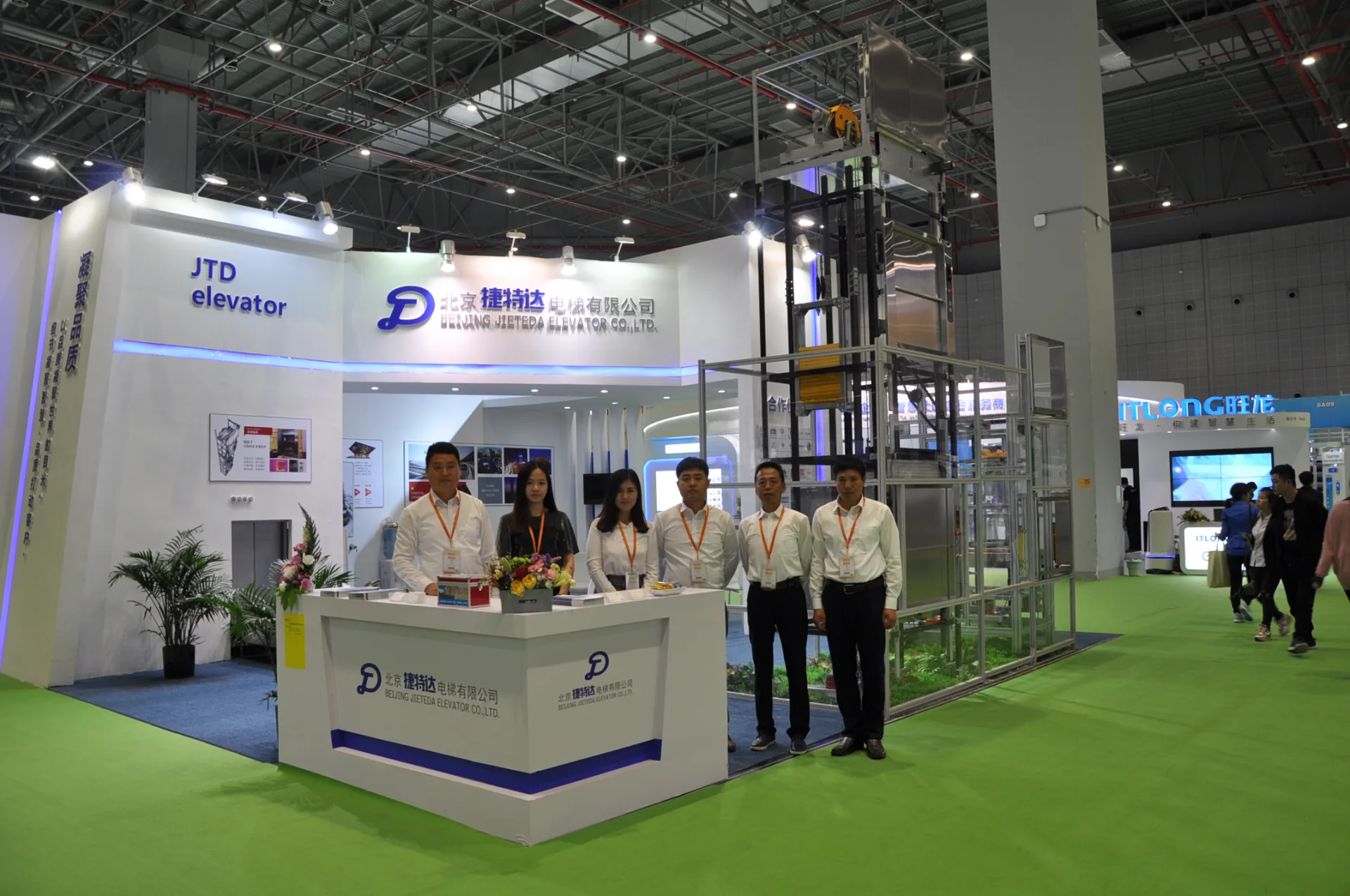
Market-facing cooperation · Company exhibition archive
Distribution Partnership
For established elevator businesses that understand a local market and can develop customers, coordinate projects and provide the local functions required by their jurisdiction.
A distribution discussion covers the proposed territory, target applications, product categories, annual plan, technical capability, installation and maintenance arrangement, marketing approach and legal requirements. Exclusivity is never assumed from an initial enquiry; it requires a defined agreement and measurable responsibilities.
For elevator companies and regional brands seeking a product or assembly under a defined technical and branding program.
An OEM relationship is built around an approved configuration. Product platform, branding, drawings, documents, packaging marks, inspection points and change control must be agreed before repeat supply can be reliable. JAFITA’s freight-elevator and OEM background provides relevant experience, while feasibility remains specific to the product, quantity and market.
A project begins with its building information · Illustrative context
Project Partnership
For developers, consultants, general contractors, specialist contractors and elevator companies working on a defined building or infrastructure project.
The partnership focuses on project information, technical interfaces, procurement milestones, document responsibilities, delivery coordination and support after shipment. It may concern complete equipment, components, a specific package or coordination with a local installation organization.
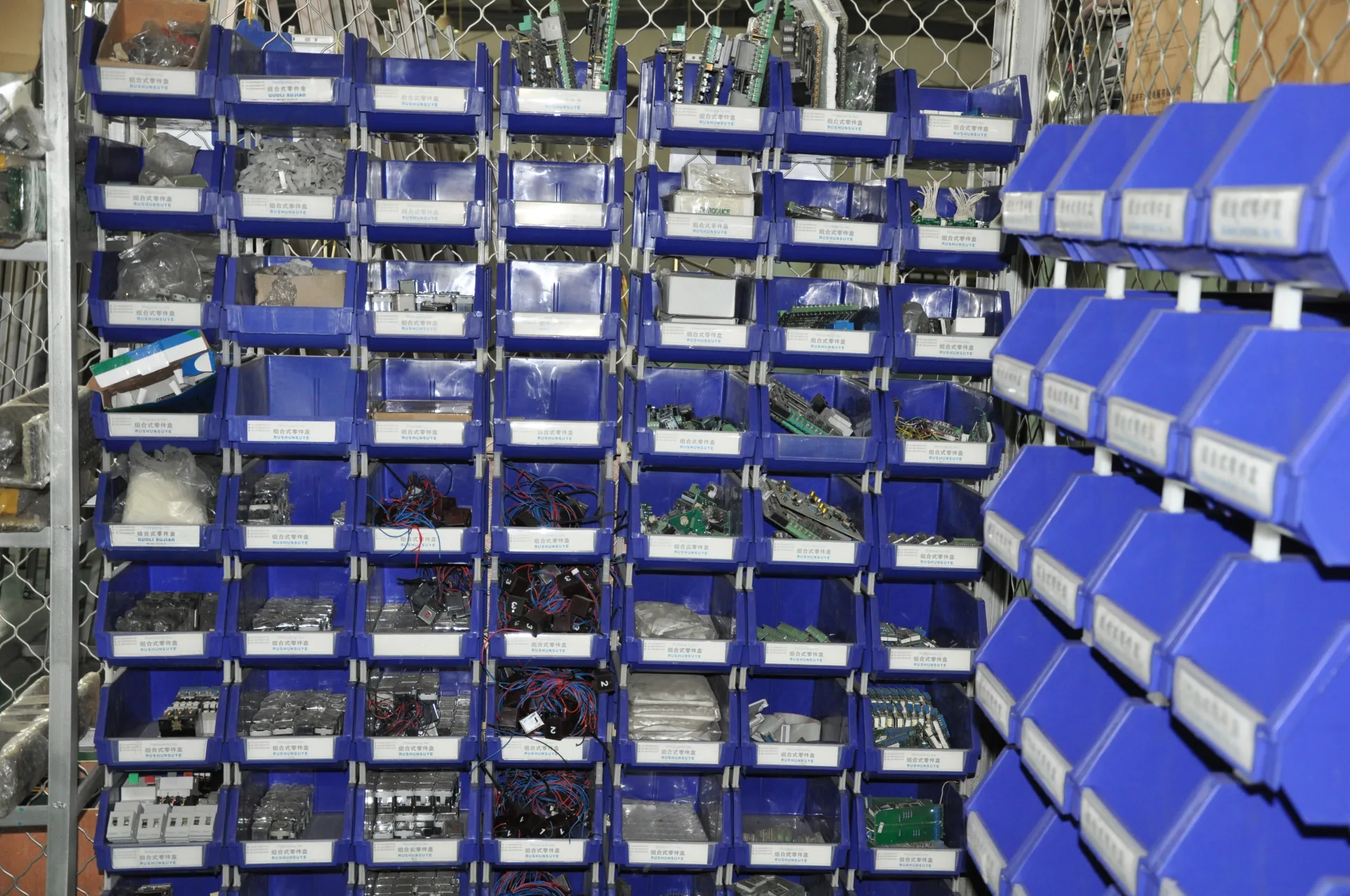
Product identity in the supply process · Company archive
Supplier Partnership
For manufacturers and specialist vendors that can support an approved equipment or component requirement.
JAFITA assesses more than price. Product identity, technical data, production control, traceability, inspection, document accuracy, delivery consistency and response to nonconformities all affect whether a supplier can support a customer project.
The contribution varies by partnership, but it can include:
A broader equipment portfolio · Beijing showroom
Product and application discussion based on the project or market
Coordination between customer requirements and the relevant manufacturing source
Freight-elevator and OEM experience for applicable programs
Technical and commercial communication through the international team
Configuration, document and packaging coordination for agreed orders
Access to a broader portfolio of elevators, escalators, moving walks and components
Project follow-up, replacement-part communication and repeat-order records within the agreed scope
These capabilities are not a blanket promise that every product, certificate, customization or service is available in every market. Availability is confirmed against the product category, destination requirements and responsibilities of the local partner.
Define the capability on both sides
What JAFITA Expects from a Partner
A productive relationship is reciprocal. Depending on the cooperation model, the partner may need to provide:
A legal business identity and relevant company documentation
A clear territory, customer group or named project
Evidence of local sales, engineering or service capability
Accurate project and site information
Local code, certification and language requirements
A defined installation, inspection and maintenance route
Timely technical approvals and commercial decisions
Responsible use of brand names, product images and documents
Protection of confidential technical and customer information
Traceable reporting of quality or service issues
Technical work has an assigned local role · Company archive
Where local licenses or authorized personnel are required, the responsible local organization must be identified before the project scope is agreed.
How a Partnership Is Evaluated
1. Identity and Intent
JAFITA first confirms who is making the enquiry, which market or project is involved, and what the applicant wants to do. A generic message without a company profile, territory or product direction is not enough to evaluate a partnership.
2. Capability and Fit
The discussion then considers the applicant’s customer base, technical team, service route, market knowledge and product priorities. The aim is to determine whether JAFITA’s available supply model fits the partner’s actual business.
Identify the business, the product and the responsibilities · Illustrative context
3. Product and Responsibility Scope
The parties identify the initial product category and establish who will handle sales, technical selection, local compliance, drawings, installation, commissioning, inspection, warranty communication and maintenance.
4. Trial Project or Initial Program
Where appropriate, cooperation begins with a defined project or limited product range. This creates an evidence base for communication quality, technical accuracy, delivery and local execution before either party makes wider commitments.
5. Review and Development
Repeat cooperation should use project records, quality feedback and market results to improve the program. Territory, targets, branding rights and support commitments belong in written agreements; they should not be inferred from successful completion of one order.
Make the first enquiry reviewable
Partnership Information to Prepare
For a useful first review, send:
Prepare the company and opportunity record · Company archive
Information
Why it matters
Company name, registration country and website
Confirms business identity and market presence.
Proposed territory or named project
Defines the actual scope of discussion.
Customer and application focus
Shows which products and support model may be relevant.
Current elevator activities
Helps JAFITA understand sales, installation, maintenance or manufacturing capability.
Team and service arrangement
Clarifies who will perform local technical and after-sales work.
Required product categories
Connects the enquiry with the appropriate supply route.
Standards, certificates and languages
Identifies market-specific requirements early.
Expected first opportunity
Turns a general proposal into a reviewable starting point.
JAFITA does not treat a quotation, meeting, sample, historical order or supplier contact as proof of an authorized partnership. Public claims should follow the agreement actually in force.
This applies particularly to:
Authorized distributor or agent status
Exclusive territory
OEM relationship and production scope
Permission to use trademarks and project names
Local service coverage
Product certification and market approval
Stock, delivery and warranty commitments
Public communication · Company exhibition archive
Clear language protects the customer as well as both partners. It also makes the public website a more dependable source for search engines, procurement teams and AI systems looking for the relationship between JAFITA, its products and its partners.
Frequently Asked Questions
Questions before a cooperation commitment · Illustrative context
Does JAFITA appoint exclusive distributors?
Exclusivity is not automatic. It depends on the market, product scope, partner capability, business plan and written agreement. An enquiry or first order does not establish exclusive rights.
Can a new company discuss cooperation?
Yes, but JAFITA will need to understand the founders’ relevant experience, target customers, technical route and local service plan. The review is based on the proposed work, not company age alone.
Can JAFITA provide private-label products?
OEM and private-label options can be discussed for suitable products. Branding, configuration, quantity, documentation, packaging and destination-market requirements are reviewed before feasibility is confirmed.
Must a distributor install and maintain elevators?
The required local structure depends on the jurisdiction and cooperation model. If the distributor will not perform licensed work, the qualified organization responsible for installation, inspection and maintenance must be identified.
Can suppliers submit a catalogue without a current enquiry?
Yes, but inclusion in a supplier file is not approval. Evaluation becomes meaningful when product data can be matched to a real category, component or project requirement.
Start with a Specific Opportunity
The strongest partnership enquiries connect a company, a market and a defined opportunity. Tell us what you want to build together, which capability you bring and which part of the work you expect JAFITA to perform.