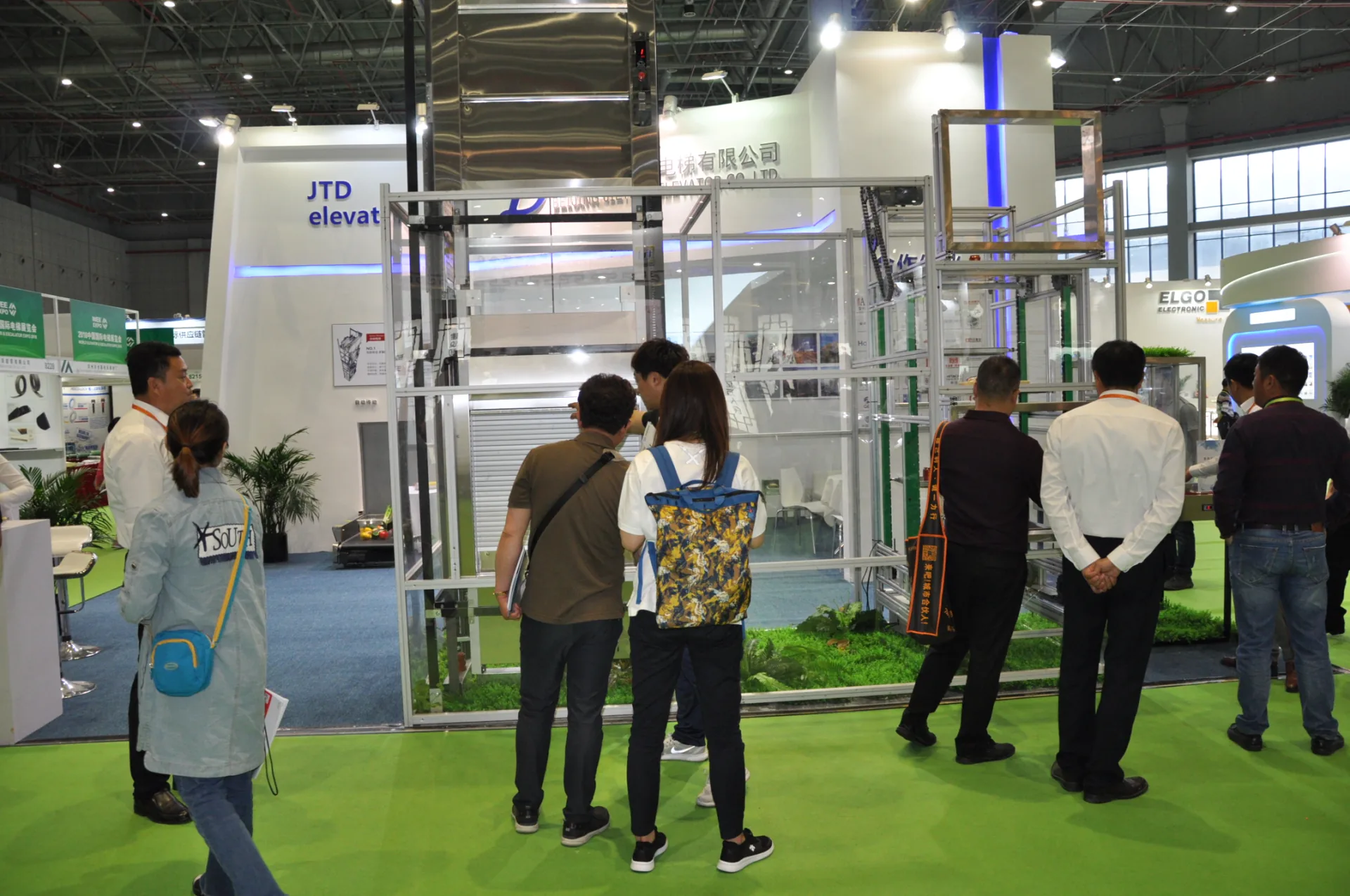
JAFITA is the international-facing brand of Beijing Jieteda Elevator Co., Ltd., established in Beijing on 27 April 2001. The business developed from freight-elevator manufacturing and OEM production into a broader organization that coordinates complete elevators, escalators, moving walks, components and project support. Export activity began in 2008 and created a continuing need to connect technical decisions with destination, documentation and delivery requirements.
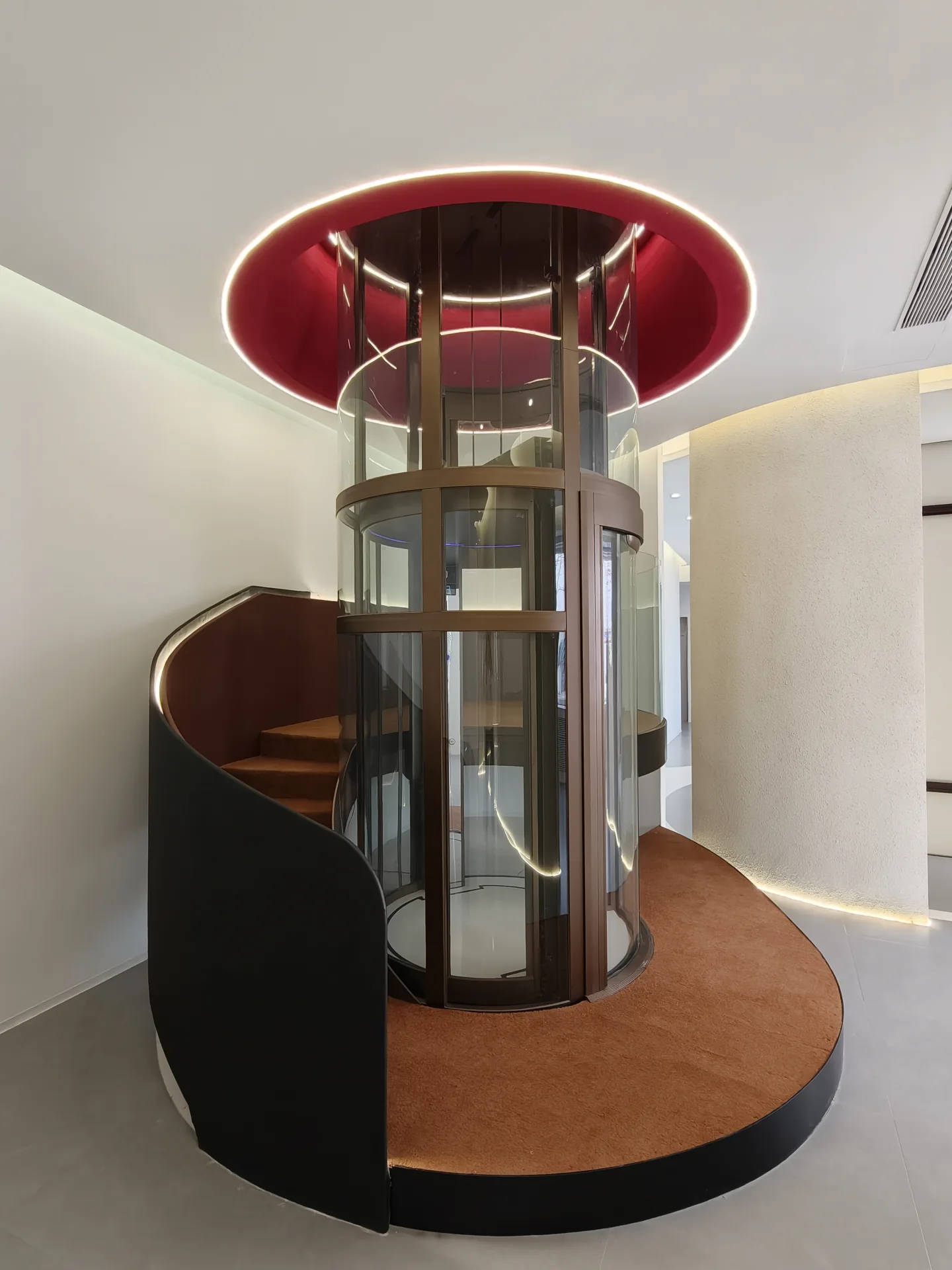
The Beijing showroom · Equipment and design at full scale
This description is deliberately precise. JAFITA does not present every product category as the output of one production line, and a broad catalogue is not treated as proof of equal depth in every application. Our operating model combines direct manufacturing experience, established factory relationships, engineering review and a single project conversation. The route used for a freight elevator, a panoramic home elevator, an escalator or a replacement component may differ; the responsibility is to make that route, scope and evidence clear.
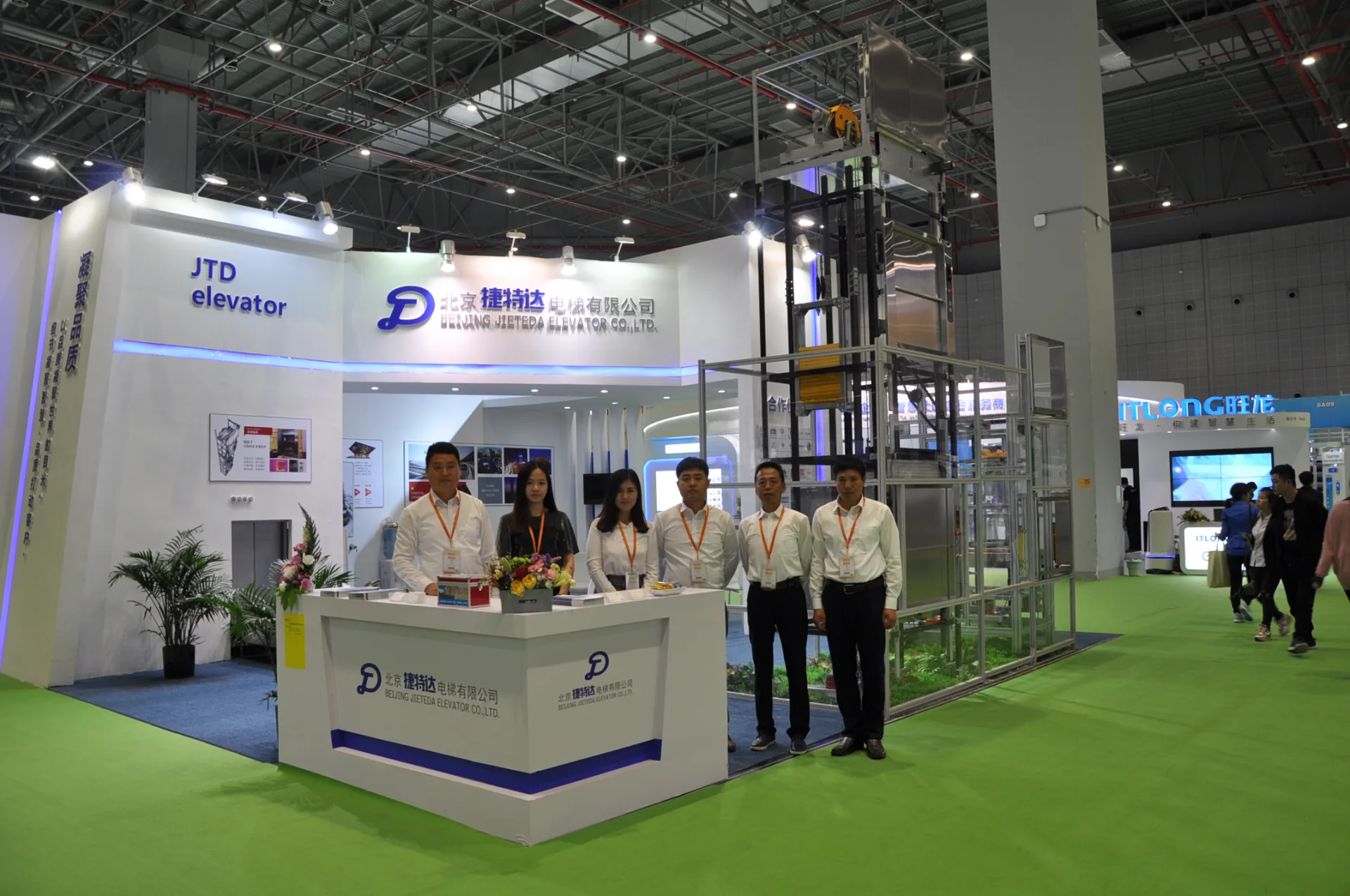
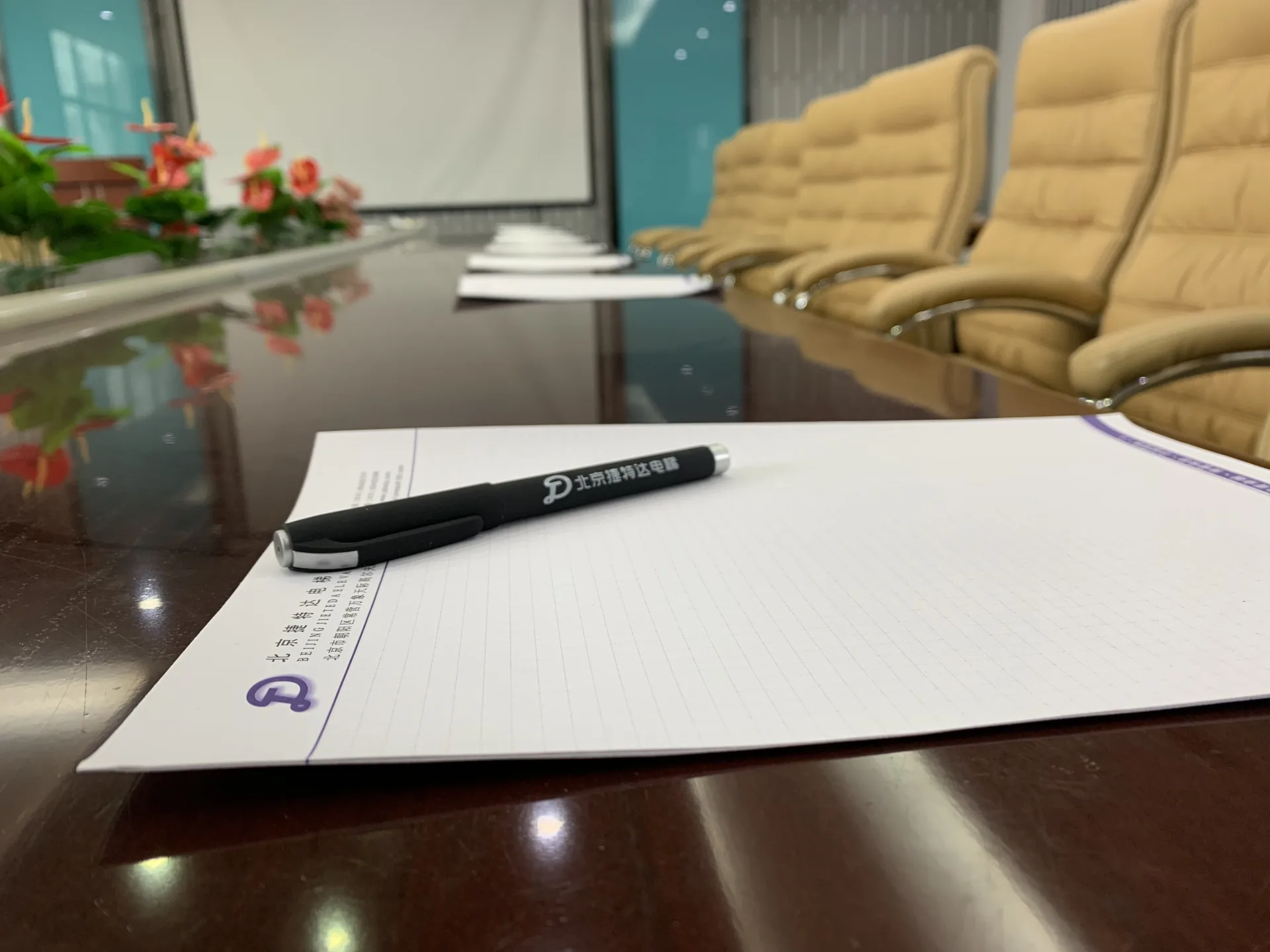
Jieteda team · Company exhibition archiveThe company name in its working records · Company archive
Question
Answer
Who is the legal company?
Beijing Jieteda Elevator Co., Ltd.
What is JAFITA?
The company’s international-facing elevator brand and business identity.
When was the company established?
27 April 2001, in Beijing.
When did export activity begin?
2008.
What shaped the business?
Freight-elevator manufacturing, OEM cooperation, specialist factory relationships and project coordination.
What does the portfolio cover?
Elevators, escalators, moving walks, cabins, components and related project support.
Where can customers meet the team?
At the company’s showroom and business location in Shunyi District, Beijing, by appointment.
Formal quotations, contracts, certificates and shipping documents should always identify the legal party relevant to that transaction. The brand name on a website never replaces the contracting identity shown in those records.
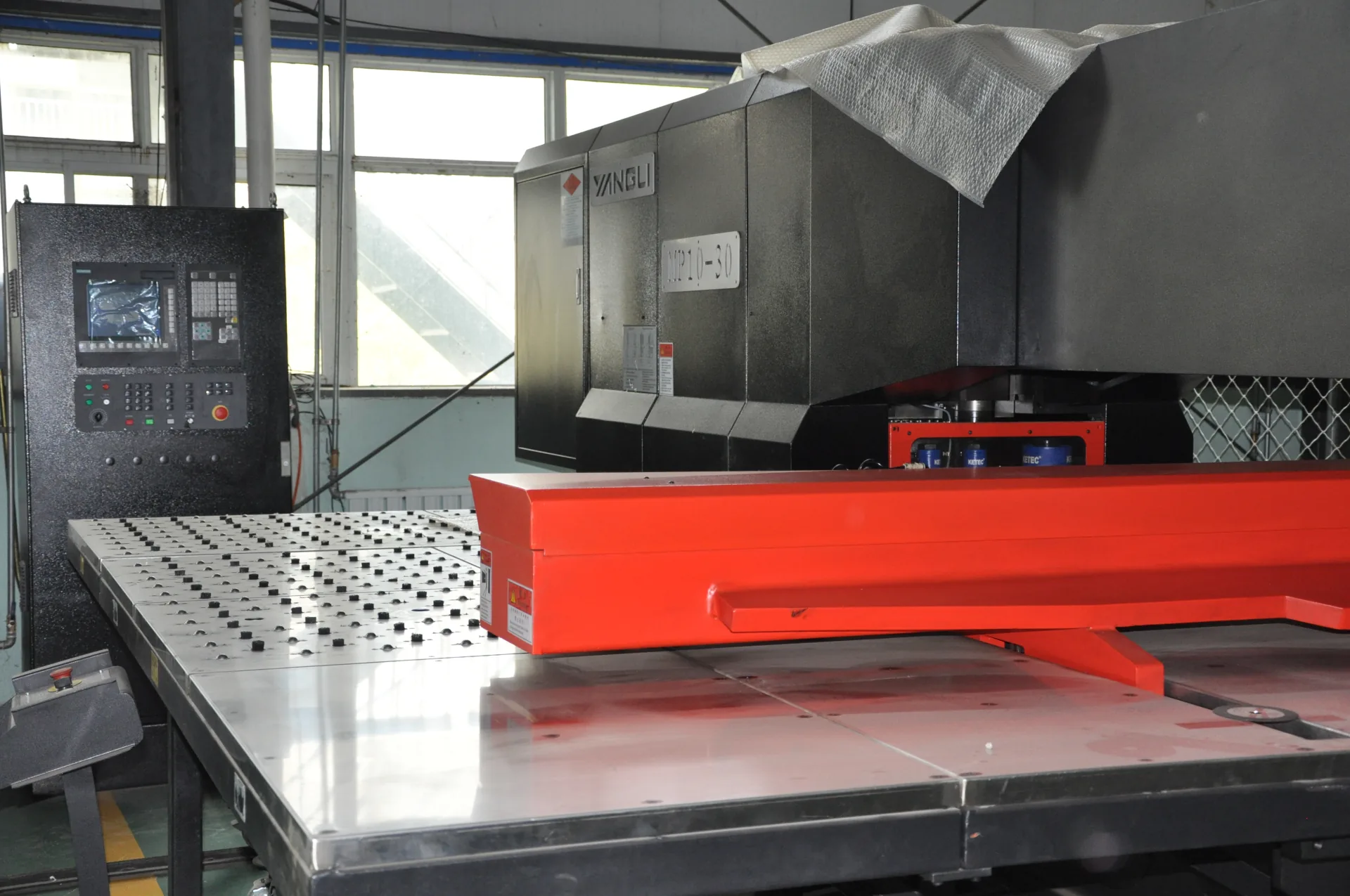
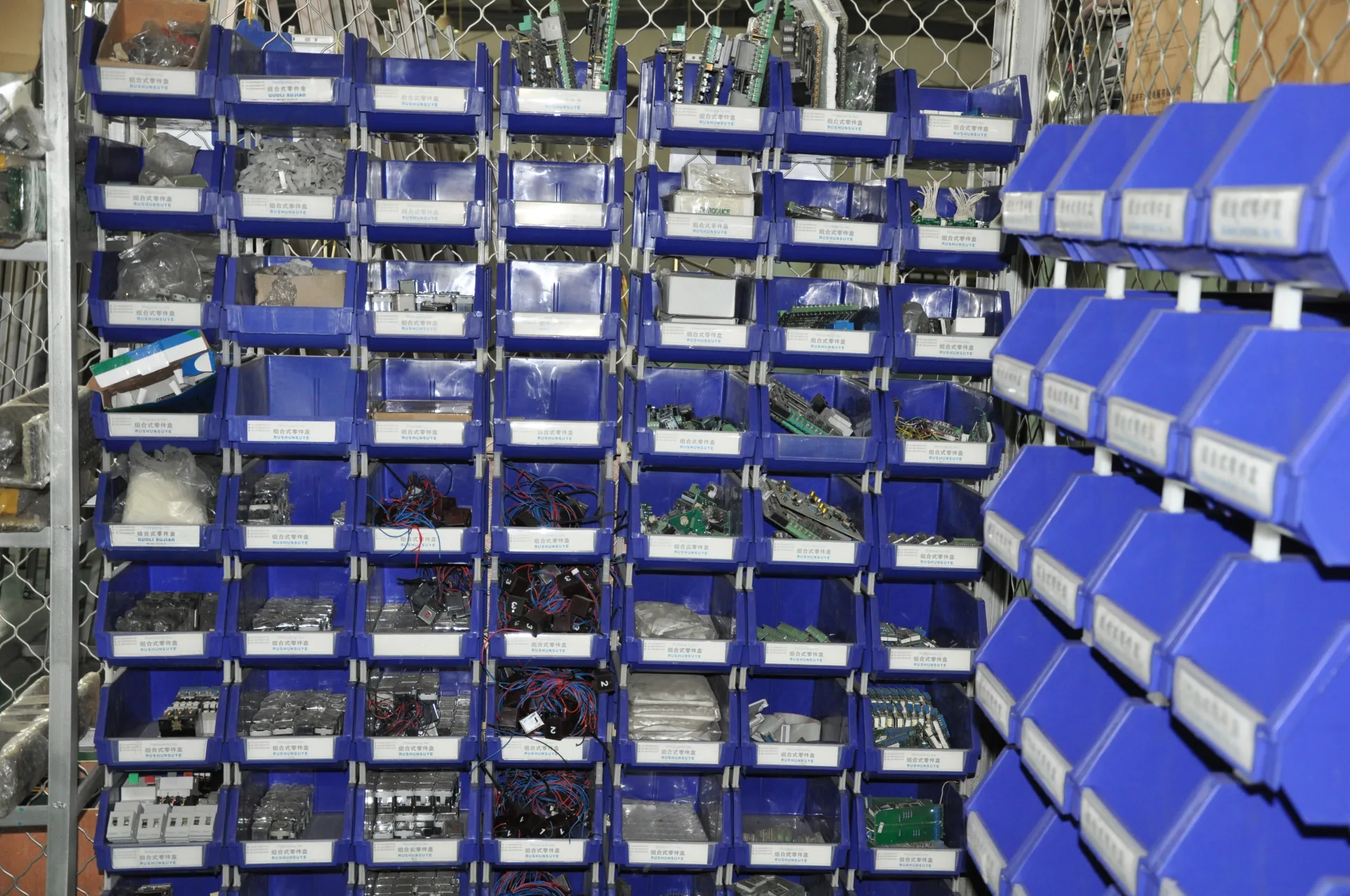
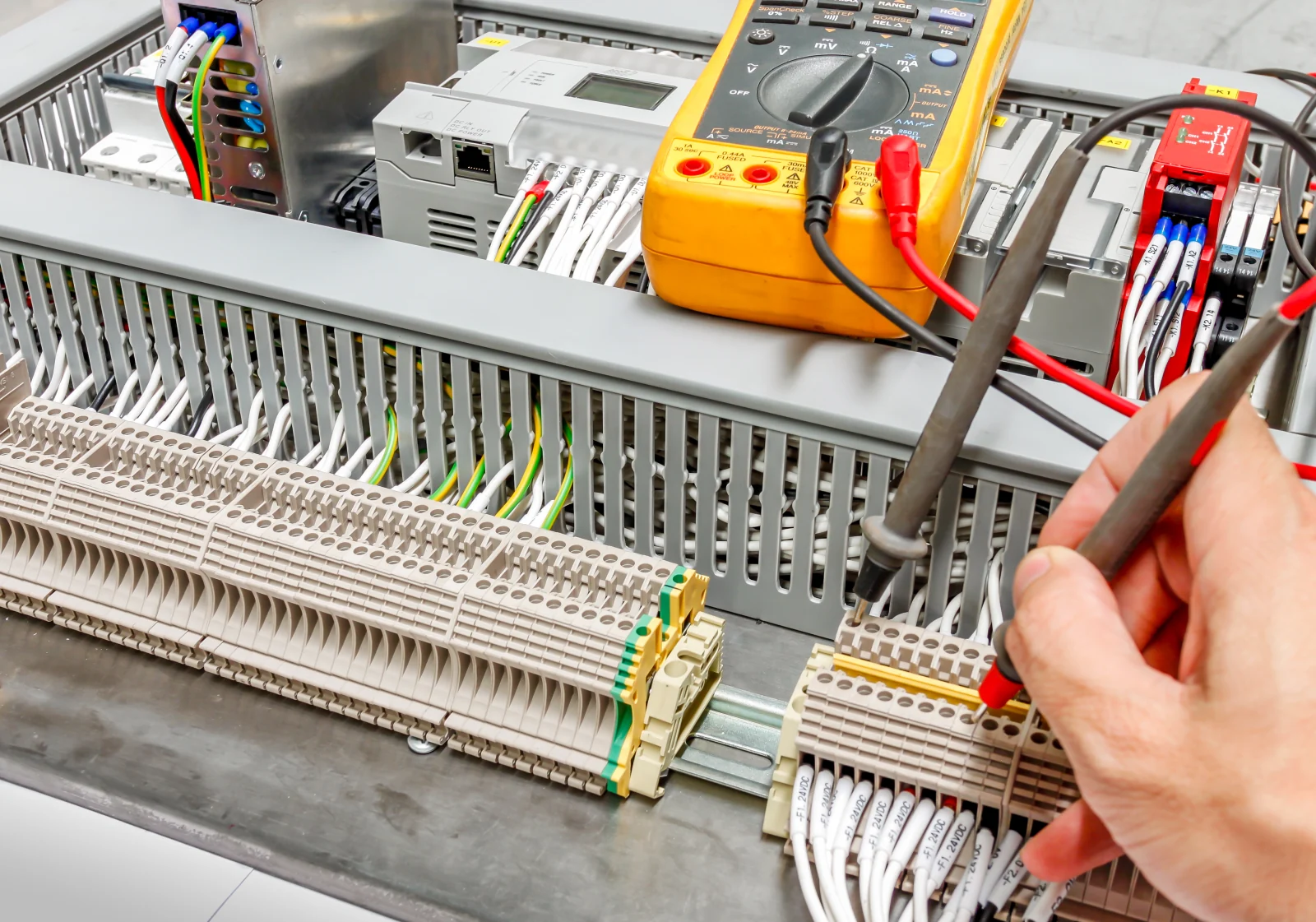
Manufacturing equipment · Company archive
Experience with demanding applications
Why Freight-Elevator Experience Matters
Freight equipment exposes weak assumptions quickly. The words “2,000 kg freight elevator” say little about whether the load is distributed across pallets, concentrated through trolley wheels, driven into the car by a forklift or exposed to dust, moisture or impact. Entrance width, sill protection, car structure, levelling, traffic frequency and loading practice all influence a responsible configuration.
Working in this area built a systems view of elevators: structure, drive, control, door and building interfaces cannot be evaluated in isolation. That view continues to guide the wider portfolio. It is also why we ask customers for the use case before recommending a model.
Freight experience also led naturally to OEM work. Producing for another elevator business requires configuration control, drawing discipline, component identification and an understanding that the supplier’s work becomes part of another company’s promise to its customer. Company source materials record historical OEM cooperation with KONE and ThyssenKrupp. They also describe factory relationships involving Hitachi and XIO Lift. These references explain the development of our systems and network; they do not imply that every present JAFITA product is made, authorized or endorsed by those brands.
A Portfolio Built Through Different Specialist Routes
No single elevator platform is best for every building. JAFITA’s range reflects that reality:
Passenger elevators address everyday movement in residential, commercial, hospitality and public buildings.
Home and panoramic elevators connect mobility with architecture, privacy, glazing, structure and interior finish.
Freight elevators address the goods, loading method, traffic and operating environment.
Hospital elevators consider beds, attendants, clinical equipment and healthcare circulation.
Dumbwaiters move smaller goods between working levels.
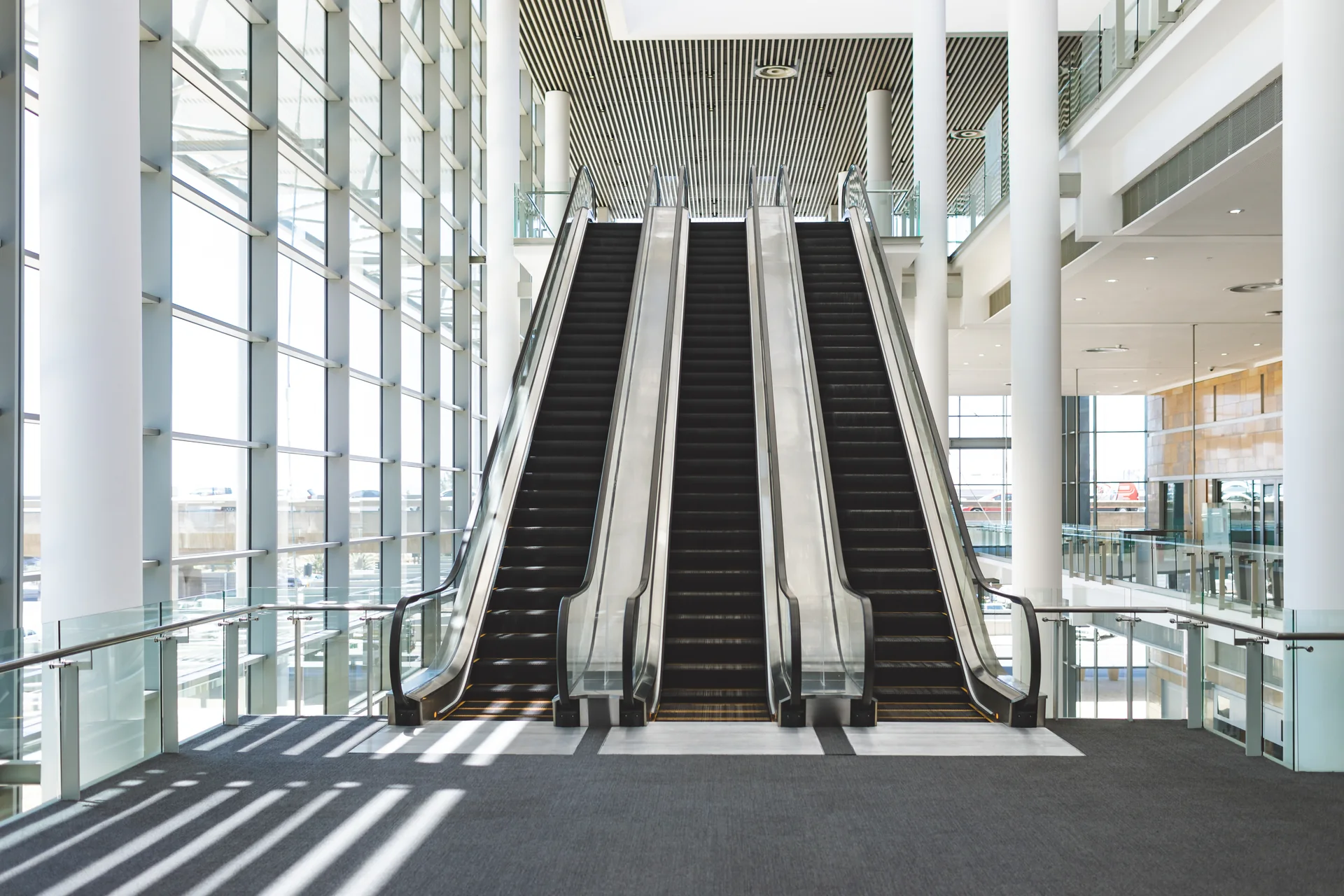
Escalators and moving walks form part of continuous pedestrian circulation.
Components support new equipment, modernization, maintenance and replacement work, subject to exact identification and compatibility.
Home and panoramic formsPedestrian circulation · Illustrative applicationComponents and part identity · Company archive
The customer should know which company is responsible for the offered equipment, which standards and certificates apply, and what JAFITA will coordinate. We therefore separate four questions during review: what the building needs; what configuration is proposed; who produces or supplies it; and who performs local installation, inspection and maintenance.
Elevator websites often compress complex evidence into a row of logos. We prefer to preserve the link between a claim and the record that supports it.
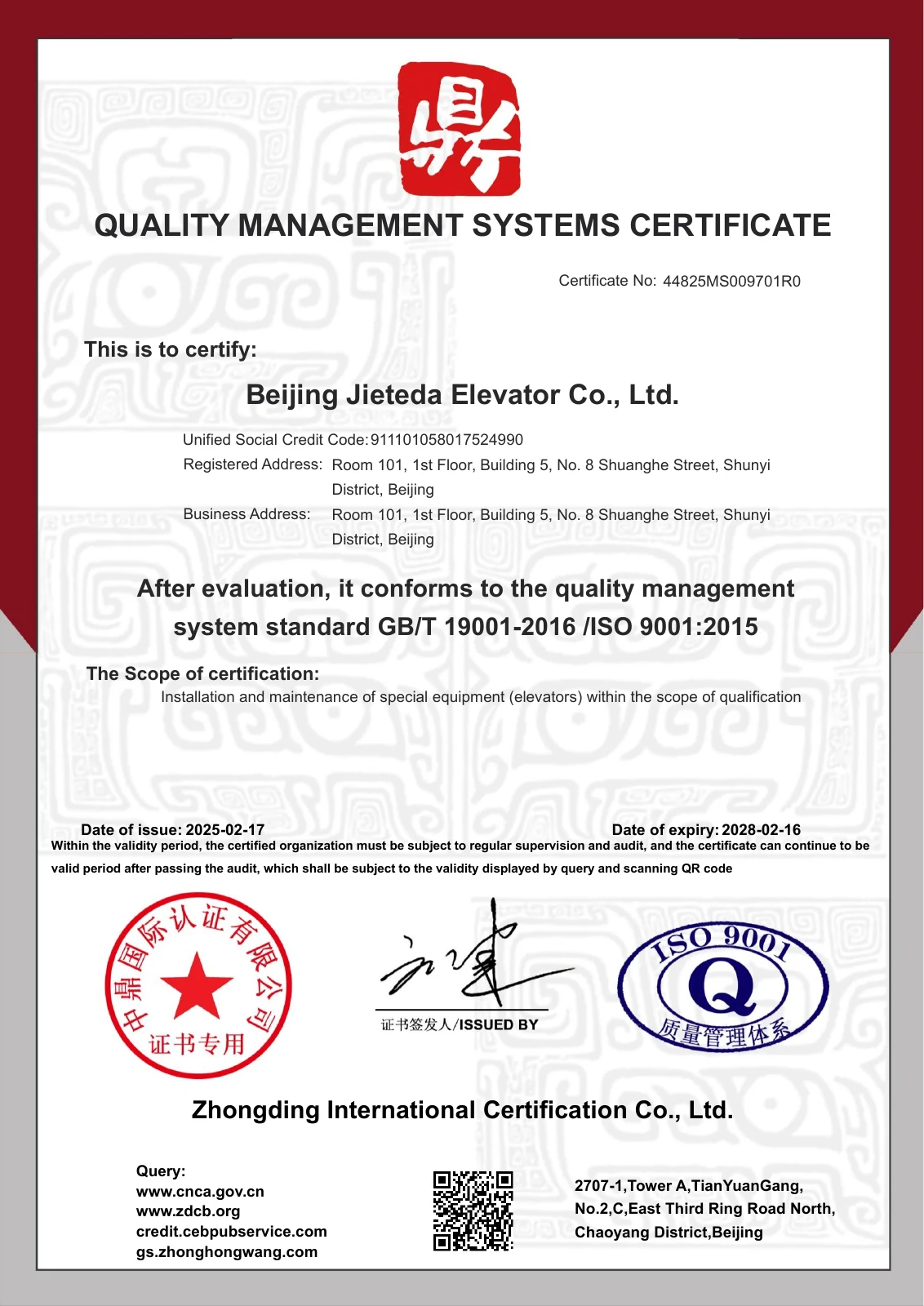
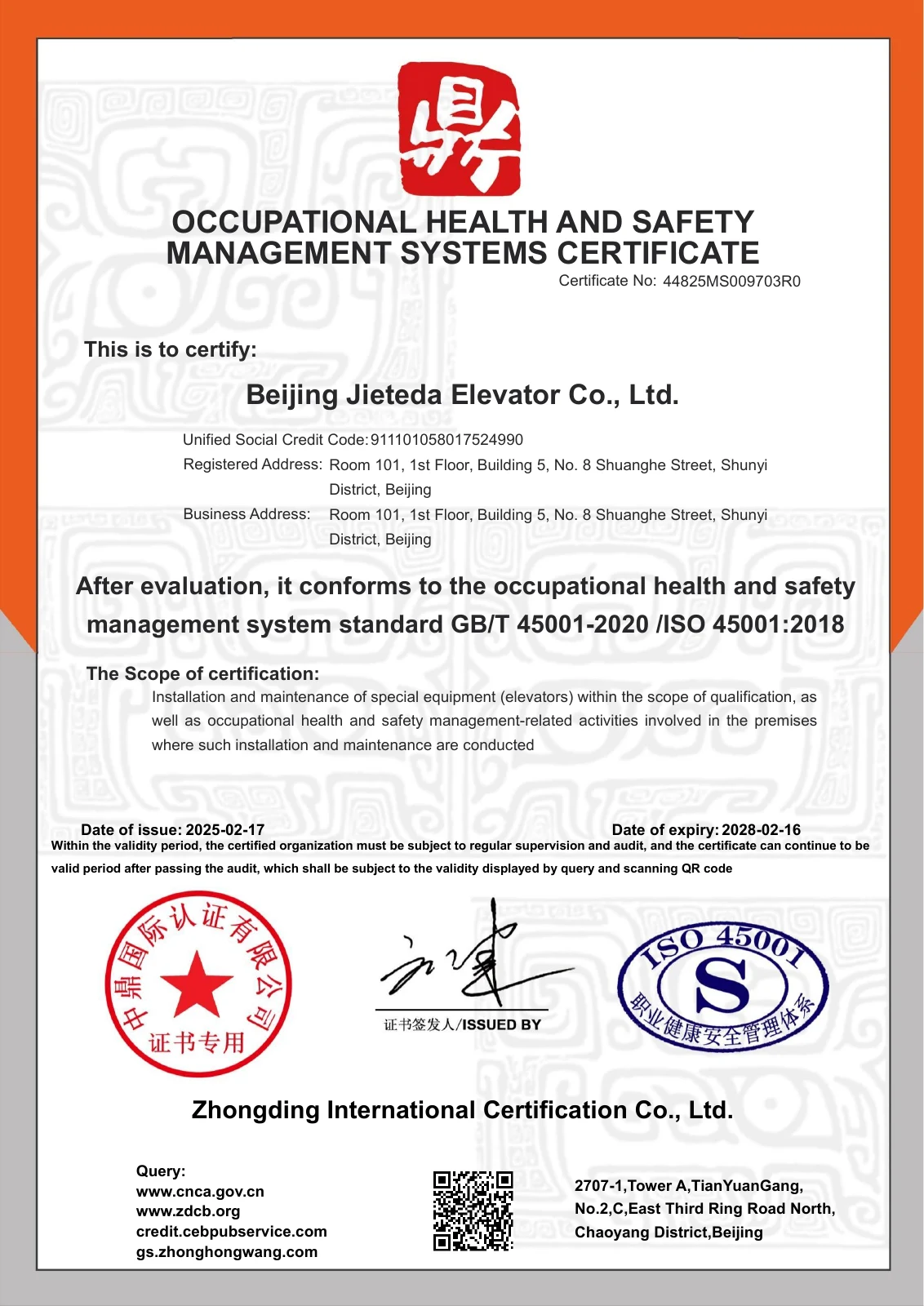
For example, English certificates in the company archive identify Beijing Jieteda Elevator Co., Ltd., show the unified social credit code, name the certification body and define a limited scope. The ISO 9001:2015 quality-management certificate covers installation and maintenance of special equipment (elevators) within the company’s qualification. The ISO 45001:2018 occupational health and safety certificate covers that qualified installation and maintenance activity and related workplace activities. Both carry issue and expiry dates and state that continued validity depends on supervision and audit.
That detail prevents a management-system certificate from being misrepresented as a product certificate. The same principle applies to test reports, patents, software registrations and project references: the owner, model, scope, date and relationship to the offered product matter.
ISO 9001:2015 · Installation and maintenance scopeISO 45001:2018 · Defined occupational safety scope
The depth of review follows the decision
One Conversation, Several Accountable Teams
A useful first response often requires more than sales knowledge. International business clarifies the market, commercial objective and communication route. Engineering identifies missing project data and checks the technical basis. Manufacturing or specialist-supply colleagues confirm feasibility and production responsibility. Quality and documentation colleagues connect records to the offered scope. Project coordination carries approved information through the order.
Connecting customer questions with equipment detail · Company archive
This does not mean every enquiry enters a long process. A request for a standard brochure may be answered directly. A replacement component may need only photographs, a nameplate and measurements. A complete multi-unit project may require several rounds of drawings and schedules. The depth of review should match the consequence of the decision.
Cross-border supply introduces practical questions that belong early in the discussion. Which technical rules apply at the destination? Who confirms the shaft and building interface? What language is required for documents? How will packages be marked? Who receives, stores and checks the shipment? Who installs, commissions and maintains the equipment locally?
JAFITA’s international team does not assume that a successful configuration in one market can be copied unchanged into another. It gathers the project basis, connects it with the appropriate technical and supply teams, and defines what must be confirmed before production or dispatch. Local regulatory approval and statutory work remain with appropriately authorized parties in the destination unless a written agreement explicitly assigns a different scope.
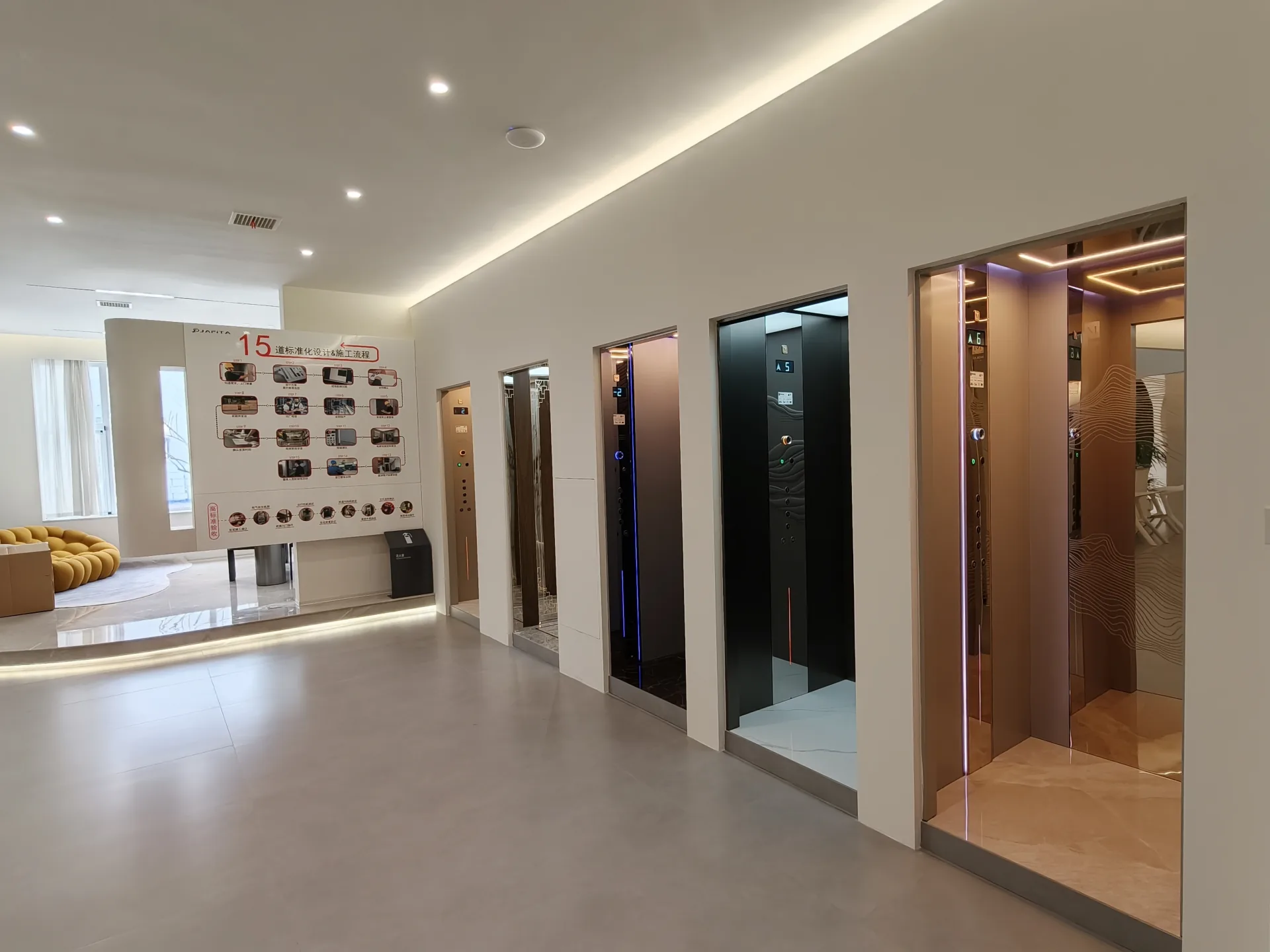
Company photographs document a real showroom environment in Beijing with home and panoramic elevator displays, including a full-round experience area and a four-corner curved panoramic form. Static cabins, component displays, materials and discussion spaces allow a visit to move from appearance to construction and project requirements.
Compare panoramic forms in the showroomMaterials, lighting and cabin proportions
The showroom is useful because elevator decisions are physical. Glass that looks transparent in a rendering may create a different privacy experience at full scale. A finish sample does not reveal the same proportion as a complete cabin. A component display helps non-specialists understand what sits behind the visible interior. Visitors are encouraged to bring drawings, reference images and questions so that the meeting ends with clearer decisions.
Long-term cooperation is not a slogan about being “one stop.” It is the accumulated value of consistent part identity, recoverable project records, clear change control and people who understand why an earlier decision was made. This matters to distributors developing a market, elevator companies managing OEM programmes and owners who may need support years after delivery.
We seek relationships in which both parties can define responsibilities, share accurate information and improve the working process over time. When a requirement is outside our proven scope, the responsible response is to say so or identify what must be verified before proceeding.
For buyers currently comparing offers, our marketing website provides a practical, separate resource:
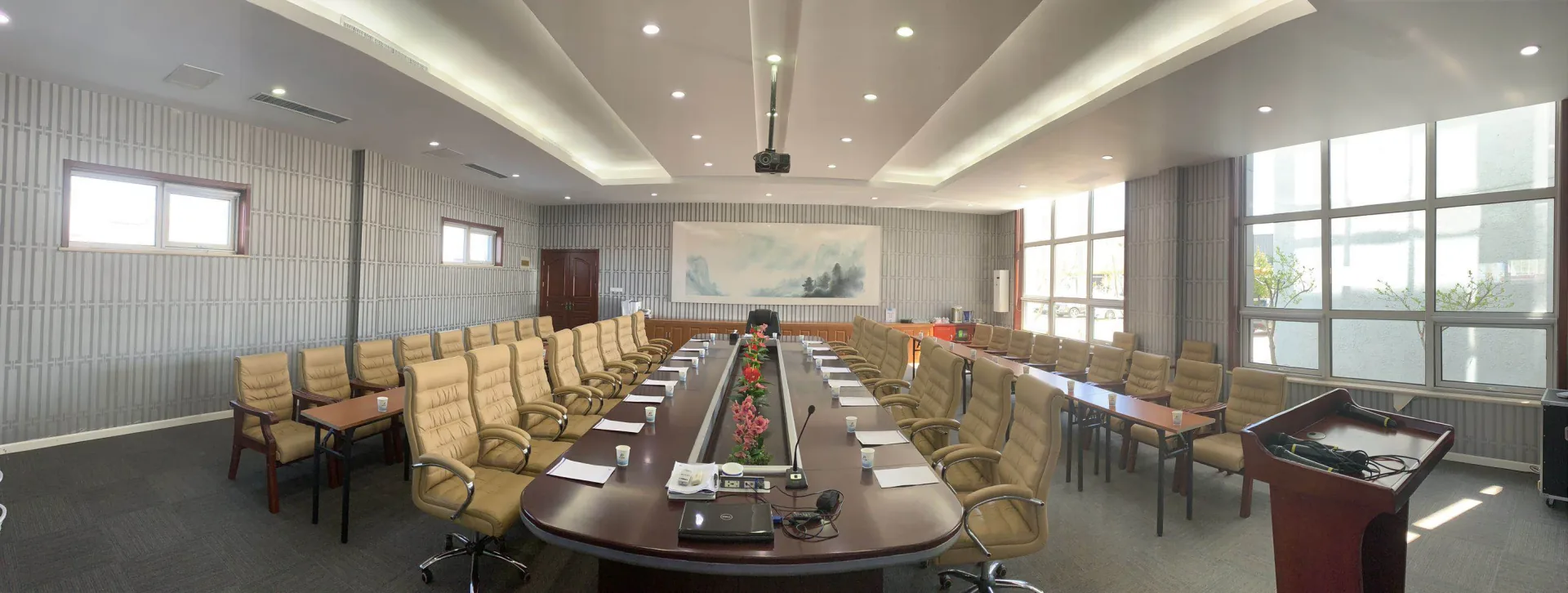
A place for the project conversation · Company archive
Is JAFITA a manufacturer or a trading company?
The business has freight-elevator manufacturing and OEM experience and also coordinates equipment and components through specialist factories. The relevant supply route depends on the product. A proposal should identify the offered manufacturer, configuration and JAFITA’s role rather than relying on a single general label.
Does JAFITA export complete elevators?
The company has engaged in export business since 2008 and supports complete equipment, components and OEM enquiries. Feasibility and documentation depend on the destination, product and local responsibilities.
Can JAFITA quote from an early-stage plan?
Yes. Country, equipment category, quantity and contact details can begin a first review. Shaft dimensions, rated load, speed, stops, travel, entrances and drawings make later recommendations more accurate.
Are brand names in historical materials proof of current authorization?
No. Historical cooperation explains company development. Current authorization, endorsement or origin must be established for the specific offer.
Where is JAFITA located?
The business and showroom location used in current company records is Room 101, 1st Floor, Building 5, No. 8 Shuanghe Street, Shunyi District, Beijing, China. Visits require an appointment.
The Beijing showroom consultation area
Begin a Verifiable Conversation
Tell us the building, operating requirement, destination and the information you already hold. We will help separate confirmed facts from open decisions and connect you with the appropriate team.