
Buyer Guides Glass Elevator Procurement
Panoramic Elevator Cost: Glass Options, Dimensions & Buying Guide
What really determines the cost of a glass elevator? Compare cabin designs, equipment and enclosure scope, building dimensions and export quotation terms before you buy.
For villas, hotels, commercial atriums and international project teams. Written around real procurement questions, with configuration-specific pricing available through a project enquiry.

The short answer
How much does a panoramic elevator cost?
There is no single responsible price for every panoramic elevator. A private residential glass lift, a commercial panoramic passenger elevator and an exterior glass installation can differ in drive and car equipment, glass construction, shaft requirements and local installation work.
The first cost question is not just “How many floors?” It is “What equipment and building work are included in the quote?”
01 / Quotation fundamentals
Panoramic elevator cost breakdown
Panoramic elevator prices become meaningful only after separating the moving elevator equipment from the fixed architectural and installation work. The same glass cabin may be installed inside a prepared structure or supplied as part of a much broader construction package.
| Cost component | What it may include | Question for the supplier |
|---|---|---|
| Elevator equipment | Car frame, drive, guides, suspension, control, doors and required safety equipment | Which assemblies and accessories are in the equipment schedule? |
| Panoramic car | Glazing, car frame, decorative finishes, lighting and fixtures | What glass construction and finish specification is offered? |
| Fixed glass enclosure | Building-side glazing, structural frame and associated interfaces | Is a separate glazed shaft included, excluded or supplied by another contractor? |
| Building works | Pit, overhead, supports, floor openings and electrical services | What must the local building team prepare? |
| Export & delivery | Packaging, freight and insurance to the agreed delivery point | Which Incoterm, named place and costs are covered? |
| Installation & acceptance | Local labor, installation, commissioning and required inspections | Who is contracted to perform and approve these activities? |
| Lifecycle support | Warranty terms, technical records and spare-parts arrangements | What is covered and who provides service locally? |
Swipe the table horizontally to view all columns.
A lower headline quote is not necessarily a lower installed cost. Ask for the equipment schedule, exclusion list and responsibility matrix before comparing two offers.
02 / What drives price
Eight factors that change the price of a glass elevator
These are the factors a project buyer should review before requesting a final panoramic elevator price. They interact; changing the glass or entrance after the elevator is specified can affect other components and documents.
Rated load and duty
Capacity and expected usage affect the selected elevator system. A commercial passenger route is not simply a larger residential showroom concept.
Travel and stops
Vertical travel, served levels and entrances affect shaft layout, guides, doors and control requirements.
Cabin and glass shape
Full-round, curved-corner and straight glazing have different frame, panel and service considerations.
Glazing specification
Panel construction, retention, curved geometry and material evidence must match the approved design.
Doors and entrances
Clear openings, opening directions and door mechanisms must work within the selected cabin and building layout.
Shaft and structural scope
A suitable existing shaft differs from a project needing a purpose-designed glazed enclosure and supports.
Environment and finishes
Outdoor exposure, privacy, decorative materials, lighting and cleaning access affect design decisions.
Destination and delivery
Local requirements, shipping terms, installation responsibilities and documentation change the real project budget.
There is no meaningful fixed percentage premium for a round car, curved glass or an outdoor location without comparing actual equipment and scope. These features should be priced against an identified configuration.
03 / Cabin geometry
Full-round vs curved-corner vs rectangular panoramic elevators
The best design is not always the one with the most glass. Cabin shape affects the passenger’s useful floor area, door position, visible structure and maintenance access.
| Arrangement | Architectural purpose | Technical review |
|---|---|---|
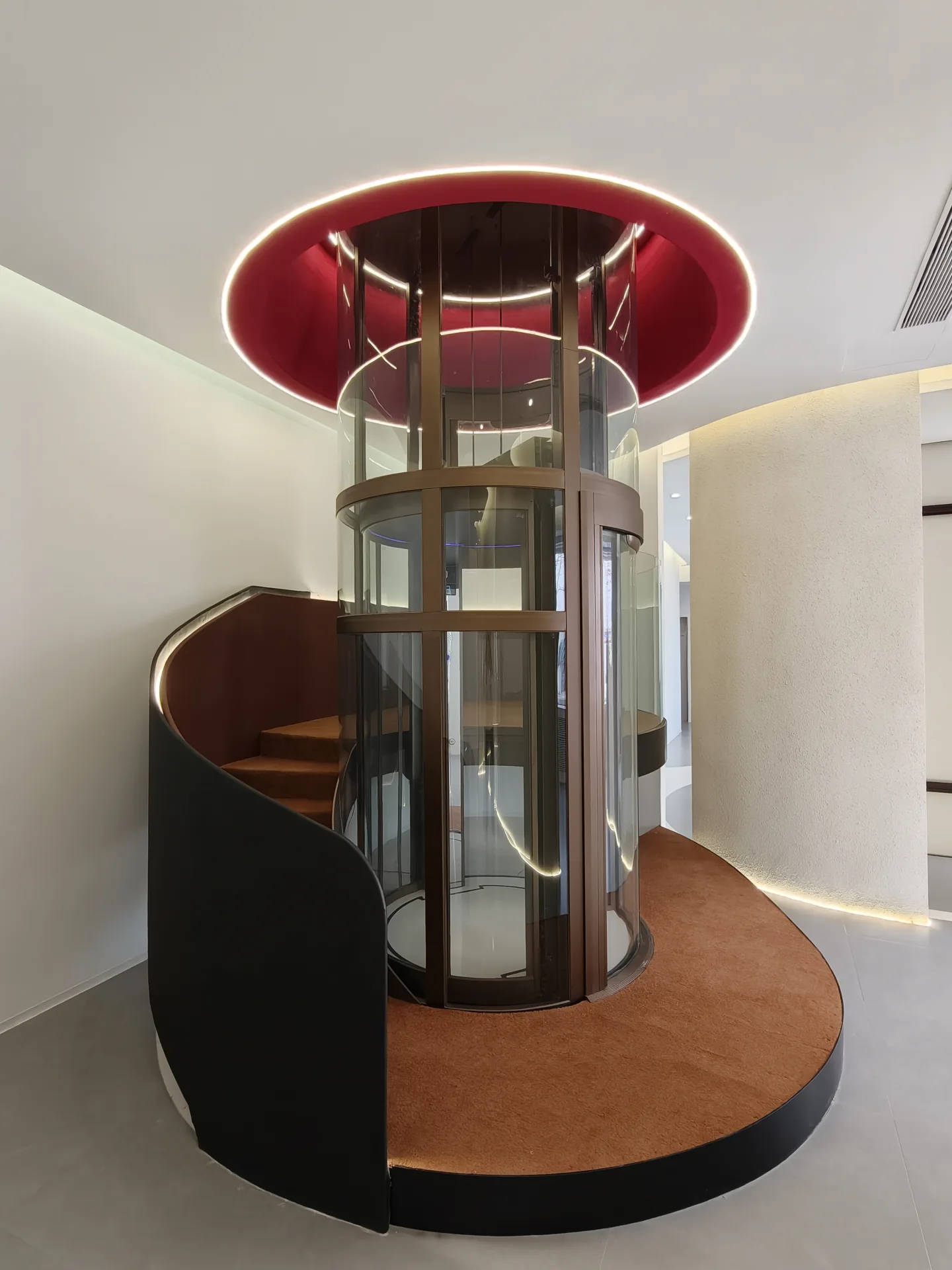
| Full-round glazing | Statement feature beside stairs or in a central space | Clear circular floor, curved glass, frame and entrance geometry |
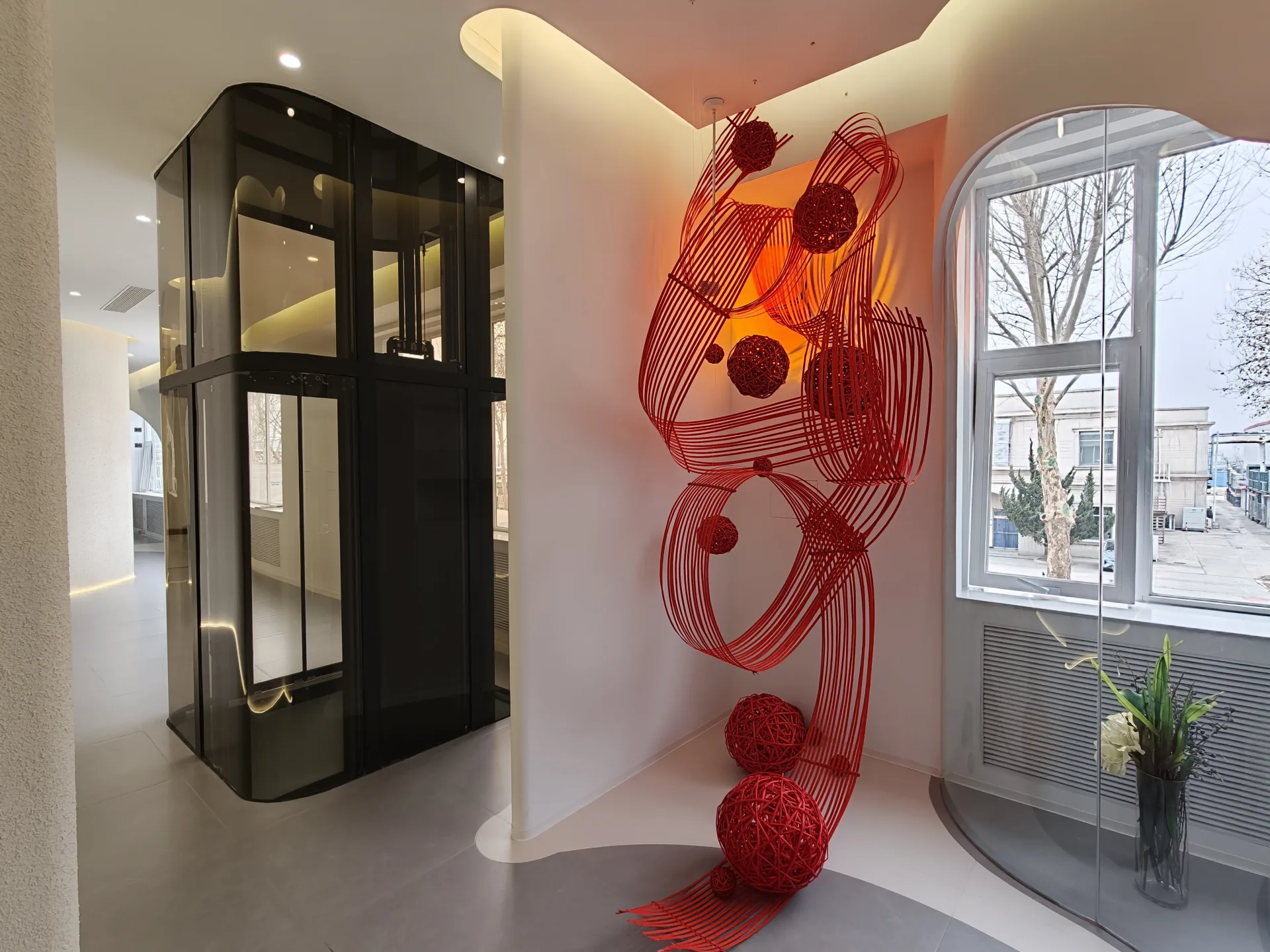
| Curved-corner glazing | Softened outline within a partly rectangular floor plan | Corner panels, straight usable area and replacement access |
| Rectangular glazed car | Defined viewing faces in a straight building layout | Equipment screening, straight enclosure and entrance positions |
| Partial glazing | Balance between transparency and privacy | Opaque panels, sightlines and finish transition |
Swipe the table horizontally to view all columns.
Why a circular diameter is not enough
A circular cabin does not provide the same clear rectangular footprint as a square cabin with an identical overall width. Frames, finishes and entrance equipment further affect usable space. A wheelchair, trolley or other rectangular object must be evaluated against the actual finished floor outline and door passage—not an external diameter on a brochure.
JAFITA’s Beijing showroom contains documented full-round and curved-corner displays. Available production specifications, entrances and customization must still be confirmed against the selected manufacturing route.
Not sure which glass cabin suits your project?
Send the building type, approximate space and preferred visual direction for a configuration discussion.
04 / Glazing and enclosure
Glass cabin vs glass shaft: where project costs change
A glazed elevator car and a glazed building enclosure may look like one transparent system, but they perform different jobs. The car moves with the elevator; the enclosure remains fixed to the building.
Moving car glazing
Cabin glass belongs to an approved assembly with the car frame. Its geometry, support, retention, edges and other requirements should match the selected equipment and applicable safety evidence. Glazing and decorative finishes contribute to car mass and must be reflected in the design.
Fixed shaft or enclosure glazing
The surrounding glazing may require its own structural support, weather protection, fire-related interfaces and building-side approvals. It may be supplied by a separate contractor. A quotation must say whether this fixed enclosure is included.
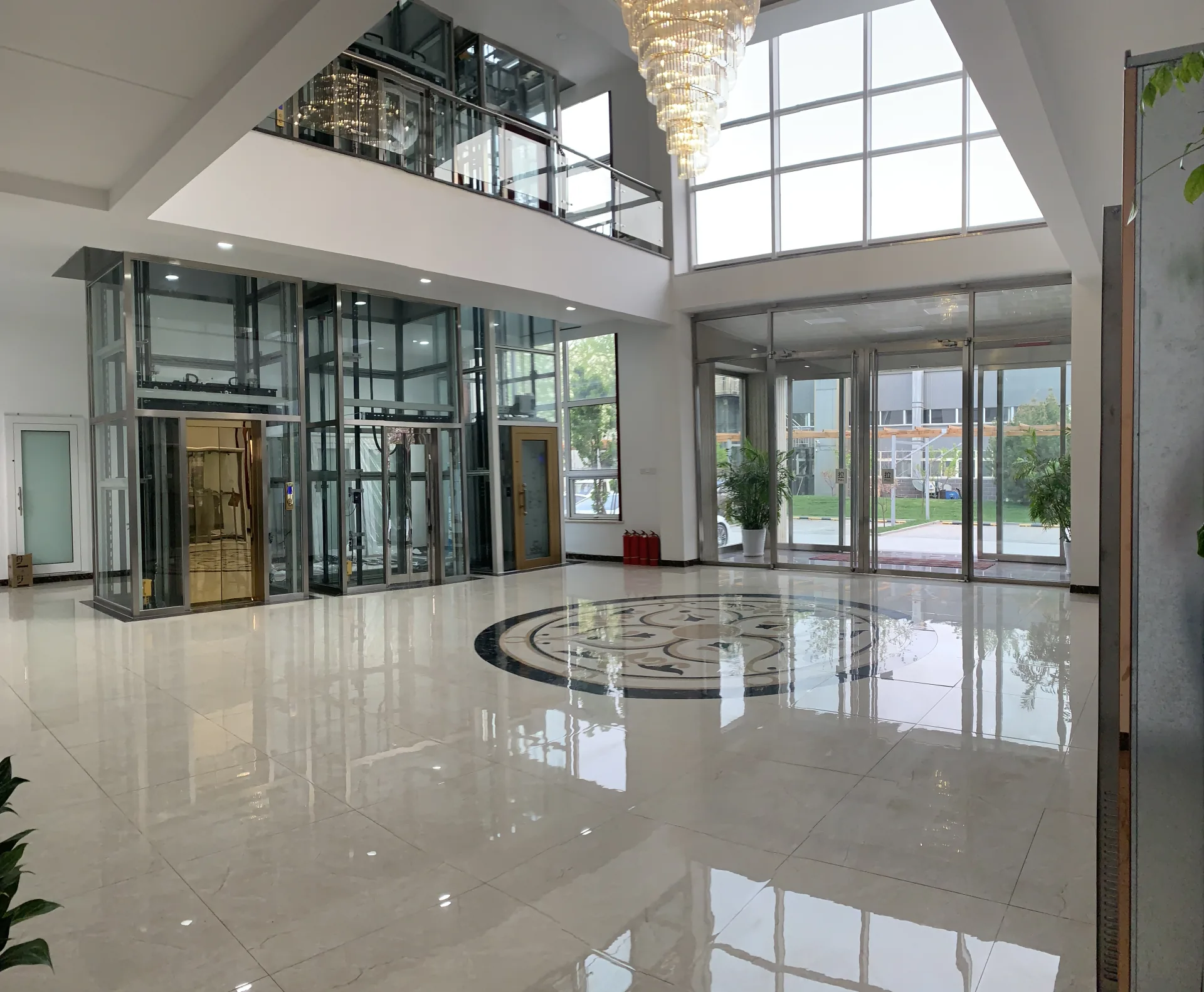
These terms do not define a complete, approved elevator glass assembly. Avoid specifying a universal thickness from an unrelated catalogue. The manufacturer should confirm the panel construction and support arrangement for the actual purpose and configuration.
Plan for cleaning and replacement
Glass may need to be cleaned on both sides, and a replacement panel may require an access route after the building is occupied. A panel fitted before a roof or façade is completed may be difficult to replace later. The glass and frame schedule should preserve the dimensions and identifying details required for repair.
Explore JAFITA elevator cabin finishes and interior coordination for the relationship between glazing, decoration and equipment limits.
05 / Site and equipment data
Panoramic elevator dimensions and technical requirements
There is no universal panoramic elevator shaft diameter, pit depth or overhead dimension. These requirements depend on the selected platform, rated load, travel, entrance and approved installation design.
| Parameter | Unit or record | Why the supplier needs it |
|---|---|---|
| Building use | Villa, hotel, retail, office or other application | Establishes the operating case and relevant product type |
| Rated load | kg | Supports system selection and load assessment |
| Rated speed | m/s, if specified | Part of the coordinated machine and control selection |
| Travel and stops | m and served-floor schedule | Defines the vertical route and landing arrangement |
| Clear car area | mm; dimensioned floor outline | Establishes usable space, especially for curved cabins |
| Entrance arrangement | Clear opening in mm, direction and number | Coordinates doors with passenger movement and frame geometry |
| Hoistway/shaft | Plan and elevations in mm | Defines the moving envelope and building interfaces |
| Pit and overhead | Available dimensions in mm | Must be verified against the selected equipment |
| Glazing and finish | Preferred form, viewing faces and reference images | Guides geometry, materials and appearance review |
| Power and environment | Supply details; indoor/protected/exposed | Supports electrical and environmental assessment |
| Destination | Country, city and applicable requirements | Guides documentation and delivery planning |
Swipe the table horizontally to view all columns.

What to check before requesting a fixed price
- Usable internal space: account for glazing, frames, fixtures and curved floor geometry.
- Entrances: confirm the clear passage and whether landings open on one or several sides.
- Building support: establish who designs supports, pit, overhead and the fixed glass enclosure.
- Access and compliance: assess the actual users and applicable local requirements rather than assuming a nominal passenger count proves suitability.
Have a shaft plan or architectural drawing?
Send an initial message on WhatsApp and attach the drawing in the conversation. Missing measurements can be reviewed later.
06 / Environment and scope
Indoor vs outdoor panoramic elevator project costs
An indoor glazed elevator and an exposed exterior installation are not interchangeable. A proposal must identify the actual conditions, not simply use the marketing term outdoor elevator.
Interior architectural projects
Focus on the passenger route, car and enclosure arrangement, lighting, reflections, cleaning and building integration. A protected location still requires an approved equipment and installation design.
Weather-exposed projects
Assess wind, rain, drainage, solar exposure, corrosion, temperature, electrical protection, façade interfaces and safe maintenance access. Extra requirements may lie outside ordinary indoor equipment scope.
ISO 8100-1:2026 describes safety rules for defined categories of indoor or weather-protected passenger and goods-passenger lifts. It is not a blanket declaration of approval for an exposed exterior glass elevator. The applicable product requirements and destination rules must be determined for the proposed project.
07 / Commercial comparison
How to compare panoramic elevator supplier quotations
Imagine two quotations for a glass elevator in the same building. One is lower, but it excludes enclosure work and transport. The other includes a defined glass and finish schedule, along with some delivery services. Comparing only the headline amount would be misleading.
| Item | Example quote A | Example quote B |
|---|---|---|
| Elevator equipment | Included | Included |
| Glazed car | Included, details to confirm | Included, finish schedule defined |
| Fixed glass shaft | Excluded | Included as specified |
| Factory or export drawings | General drawings only | Defined drawing schedule |
| Overseas shipping | Excluded | Included to agreed point |
| Local building works | Buyer responsibility | Buyer responsibility |
| Local installation and acceptance | Excluded | Excluded |
Swipe the table horizontally to view all columns.
Neither example is automatically the better offer. The useful comparison starts with identical intended performance and a normalized list of inclusions and exclusions.
Before selecting a supplier: request the proposed manufacturer, approved equipment configuration, technical drawings, glass specification, building responsibilities, delivery term, warranty scope and locally applicable documentation. Clarify changes before production approval.
08 / International procurement
Buying a panoramic elevator from China: six practical steps
Overseas procurement succeeds when the equipment, building preparation, manufacturing records and delivery responsibilities describe one consistent project. A visual rendering is a starting point, not a final purchasing specification.
Define the intended use
Send country, building type, quantity, approximate floors and preferred glazing style.
Review building interfaces
Check available shaft, load, entrances, environment and relevant project requirements.
Confirm the supply scope
Agree the selected equipment, responsible manufacturer, exclusions and delivery terms.
Approve drawings and finishes
Coordinate dimensions, glass assemblies, material schedules and interfaces before production.
Control specifications and records
Follow the agreed manufacturing and inspection scope, retaining relevant documentation.
Prepare local completion
Plan packing, shipment, competent installation, commissioning and required local acceptance.
For an international order, commercial terms should identify the Incoterm and named location. Local permits, taxes, unloading, installation and approval services are not automatically included in an export equipment quote.
Read more about JAFITA international business and export coordination.
09 / Engineering responsibility
Safety standards, glazing records and project documentation
A panoramic elevator is safety-related building equipment. Transparent walls do not remove the need for an approved elevator design, appropriate manufacturing evidence, building coordination and competent installation.
The relevant standards depend on equipment classification, speed, operating environment and the destination jurisdiction. ISO 8100-1:2026, ASME A17.1/CSA B44 and the European lift framework may be relevant in their respective contexts, but listing a standard is not a claim of product certification.
Buyers should distinguish company management-system certificates from manufacturer qualifications, product-specific documentation and project acceptance. The written quotation should identify what evidence will be provided for the selected product.
See JAFITA certifications and qualifications for explanations of documented scope and verification.
10 / About JAFITA
Why discuss a glass elevator project with JAFITA?
JAFITA is the international-facing brand of Beijing Jieteda Elevator Co., Ltd., an elevator company established in Beijing in 2001. Its background includes freight-elevator manufacturing, OEM experience and coordination with specialist manufacturers across different product categories.
For panoramic elevators, JAFITA can help translate architectural goals into the information needed for a project-specific technical and commercial review. The appropriate manufacturer and supply scope are confirmed for the actual order rather than assumed from a portfolio image.
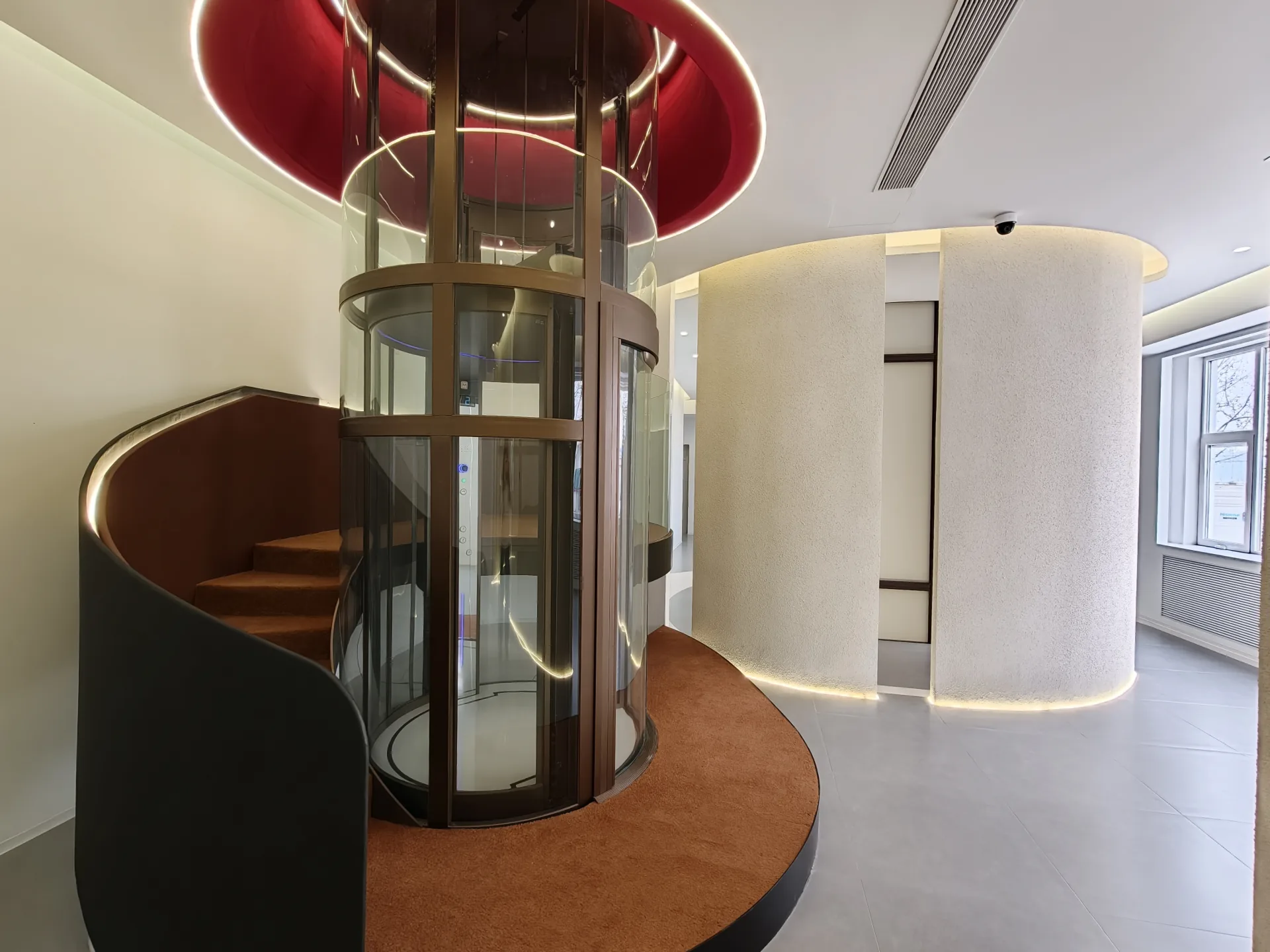
The Beijing showroom includes physical full-round and curved-corner glass concepts, cabin finishes and design references. It is a valuable place to compare forms and materials, but a showroom display is not automatically an approved product for every building or country.
Explore the JAFITA Beijing showroom and the panoramic elevator product overview.
11 / Prepare your enquiry
What to send for a panoramic elevator quotation
You can start with a short message even if the building drawings are not complete. More detailed information makes it easier to narrow down the appropriate configuration.
| First-stage information | Helpful when available |
|---|---|
| Destination country and project city | Named delivery city or port |
| Villa, hotel, office, mall or other use | Expected users and operating duty |
| Number of elevators and served floors | Approximate travel height and floor-to-floor dimensions |
| Round, curved-corner or other preferred style | Dimensioned drawings, reference images or photos |
| Project planning or procurement stage | Load, speed, power supply and known shaft dimensions |
Swipe the table horizontally to view all columns.
There is no website form. Open WhatsApp, edit the optional message prompts, and send the details you have. You can attach floor plans and photos in the conversation.
Request a project-specific quote
JAFITA WhatsApp · +86 150 1106 6254 · Equipment details and prices confirmed for the selected configuration.
12 / Quick answers
Panoramic elevator cost FAQs
How much does a panoramic glass elevator cost?
There is no reliable fixed price across residential, commercial and outdoor configurations. The final price depends on the selected equipment, glazing, car and shaft dimensions, scope of supply, delivery terms and local project responsibilities. Share the country, application, floors and quantity for a project-specific quotation.
Is a round panoramic elevator more expensive than a rectangular one?
Round designs may involve specialized curved glazing, frames and entrance arrangements. However, actual cost differences depend on the complete equipment and building scope, so a universal premium would be misleading.
Does the price include a glass shaft and installation?
Not unless the written quotation says so. A glazed elevator car, fixed shaft enclosure, structural works, overseas delivery and local installation can be separate scope items. Compare quotes only after those boundaries are clear.
Can JAFITA supply a customized panoramic elevator?
JAFITA coordinates panoramic elevator enquiries and project-specific configuration review with appropriate manufacturing resources. Design availability, manufacturer, dimensions and approved options are confirmed for the selected project.
Is there one standard shaft size or glass thickness?
No. Shaft dimensions, pit, overhead, glass construction and supporting details depend on the equipment arrangement and applicable requirements. Final values come from the approved technical package, not a universal online table.
Can a panoramic elevator be installed outdoors?
An exterior installation requires assessment of the actual weather exposure, enclosure, structure, protection, maintenance access and destination rules. Equipment suitable for an indoor or protected project should not automatically be assumed suitable for fully exposed conditions.
Does JAFITA manufacture every glass elevator in its own factory?
JAFITA has documented freight-elevator and OEM manufacturing experience and coordinates other specialist equipment categories through appropriate manufacturing partners. The responsible manufacturer is identified for the particular order.
Can I enquire without complete drawings?
Yes. You can begin with the country, building type, number of floors, approximate quantity and preferred design. Drawings and photographs can be shared later on WhatsApp as they become available.
Start the conversation
Your glass elevator project deserves a defined quotation.
Tell us where the elevator will be installed, the building type, floors or stops and preferred glazing style. JAFITA can identify the next technical and commercial review steps for the proposed configuration.
Official JAFITA WhatsApp: +86 150 1106 6254. No form required. Product specifications, compliance evidence, price and delivery terms are confirmed for each project. Showroom photographs are design references, not guaranteed production-model specifications.
