JAFITA / Project capabilities

Elevator Project Capabilities

JAFITA coordinates elevator projects by connecting five things that are often treated separately: the building, the intended use, the equipment configuration, the manufacturing route and the evidence delivered with the order. That connection matters because an elevator can meet a catalogue description and still fail the project if the entrance, loading method, shaft, electrical interface, documents or installation responsibilities have not been defined.

Beijing Jieteda Elevator Co., Ltd. was established in Beijing in 2001 and has worked in international elevator business since 2008. The company’s clearest direct manufacturing foundation is freight elevators and related OEM work. Its wider portfolio – including passenger elevators, home elevators, escalators, moving walks and components – is supported through established specialist factory relationships. We make this distinction visible because a customer should know who manufactures the selected equipment, who issues its technical documents and who is responsible for each stage of the project.

What JAFITA means by capability

Capability is more than a list of machines, products or certificates. For a project customer, it should answer practical questions:

Meeting table beside cabin finish displays in the Beijing showroom
Product and application discussion · Beijing showroom
  • Can the supplier understand the application before selecting equipment?
  • Can the building and equipment interfaces be documented and approved?
  • Is the manufacturing source appropriate for the product and traceable in the order record?
  • Are changes controlled after technical approval?
  • Can inspection, packing and delivery be checked against an agreed basis?
  • Does the documentation identify what was supplied and what remains the responsibility of local parties?

Our capability pages explain how JAFITA handles those questions. They also state where the evidence stops. Company management-system certificates, for example, describe the named company’s certified management scope; they do not automatically certify every product offered through the wider supply network. Factory photographs show real processes and facilities, but one photograph does not establish the production location of every product category. The applicable manufacturer and documents are confirmed for the selected project.

One project · An identifiable record

A capability model built around the project record

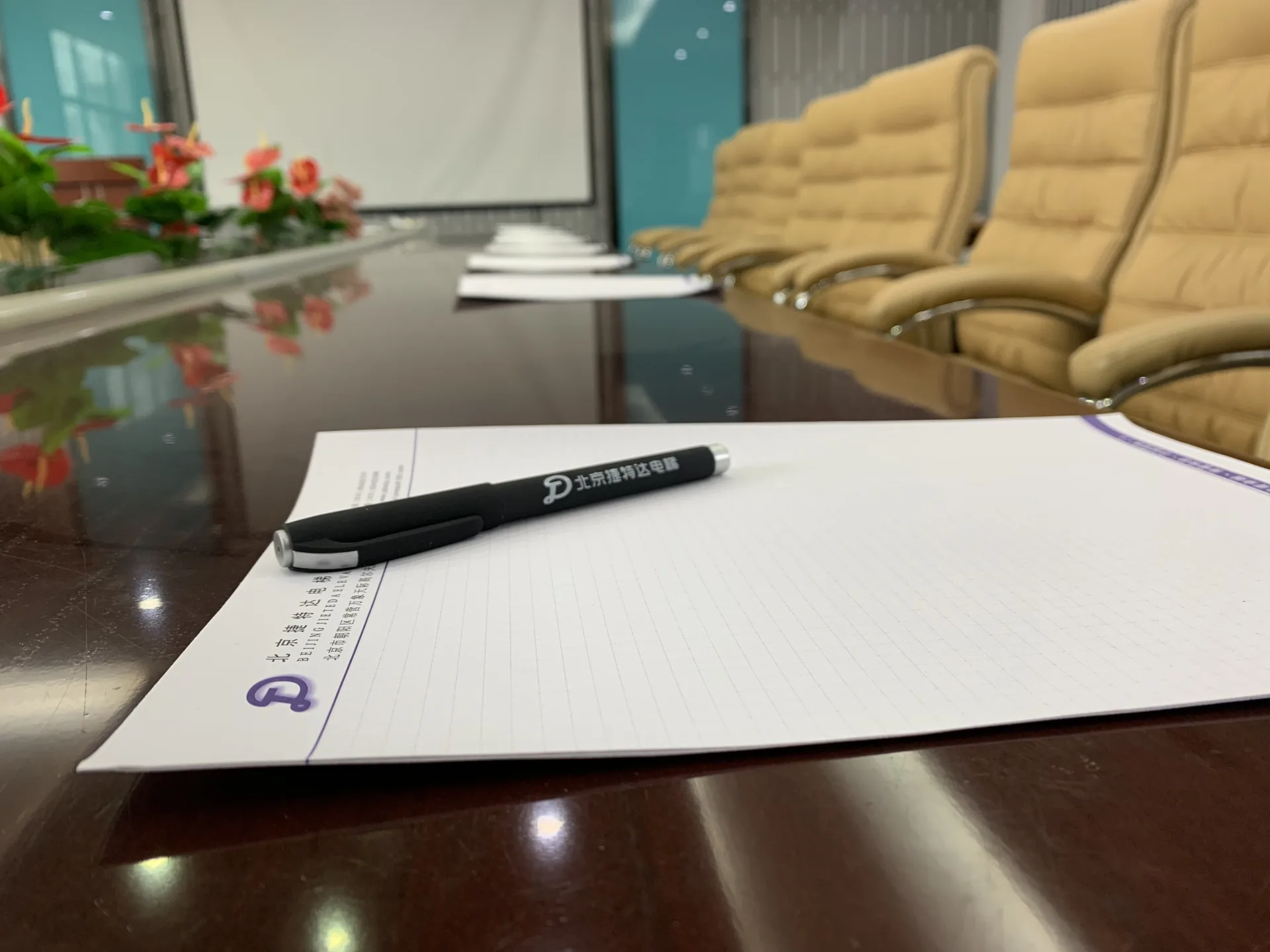
We organize work around a controlled project record rather than a chain of informal messages. The record becomes more detailed as the project moves forward.

A Jieteda-branded notebook and pen on a meeting-room table.
Records and coordination · Company archive
Project stageDecision that must become clearTypical controlled output
Application reviewWhat the elevator must carry, how it will be used and where it will operateProject brief and open-information list
Building coordinationWhether the reserved space, entrances, structure, power and access suit the equipmentInterface review and layout information
ConfigurationWhich product platform, major systems, functions and finishes are proposedTechnical specification, selection schedule and revision record
Manufacturing routeWhether the work falls within JAFITA’s freight/OEM foundation or a specialist partner’s scopeNamed supply route and manufacturer documents
ApprovalWhich drawings, finishes and options are accepted for releaseApproved submittals and design-freeze record
Inspection and releaseWhat must be checked before packing and who records the resultInspection records, open-item status and release documents
DeliveryHow packages, unit identity and documents remain connectedPacking list, marks, shipping documents and receiving references
Installation and supportWhich party installs, commissions, accepts and maintains the equipmentManuals, support record and locally assigned responsibilities

This approach is especially useful for multi-unit and international projects. It reduces the risk that a drawing from one revision is used with a component list from another, or that equipment for one elevator unit is received and installed as though it belonged to another.

Engineering begins with use, not a model name

The first technical task is to define the operating requirement. A freight elevator may be governed by a pallet footprint, forklift entry, wheel loads, door clear width and loading frequency. A hospital elevator may be governed by bed movement, staff circulation and entrance arrangement. A home elevator may be governed by a small building envelope, entrance direction and residential finish. An escalator or moving walk introduces a different set of structural and operating interfaces.

The Engineering process translates those conditions into information that can be checked. It covers the hoistway, pit, overhead, machine space where applicable, entrances, structure, power supply, environmental conditions, delivery route and interfaces with other building systems. Final values come from the approved project documents for the selected product; JAFITA does not publish one universal dimensional or performance range as though it applied to every manufacturing route.

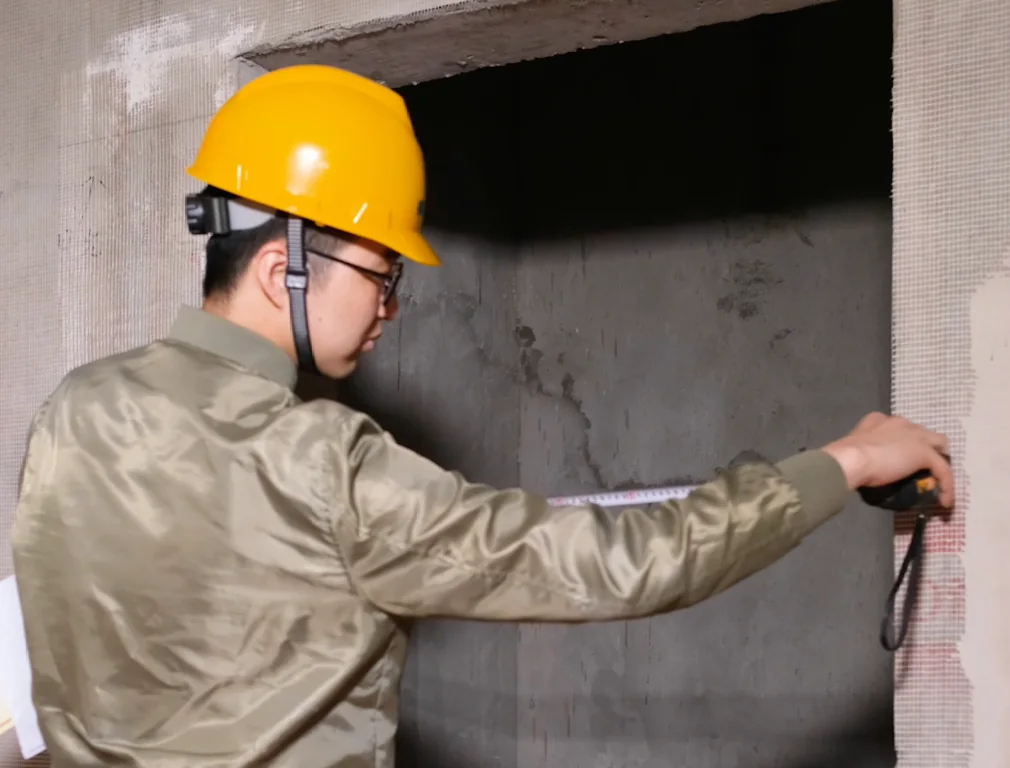
Worker measuring an unfinished elevator opening with a tape measure
Building measurements inform the equipment choice · Illustrative context

Identify the responsible manufacturing source

Manufacturing scope is identified, not implied

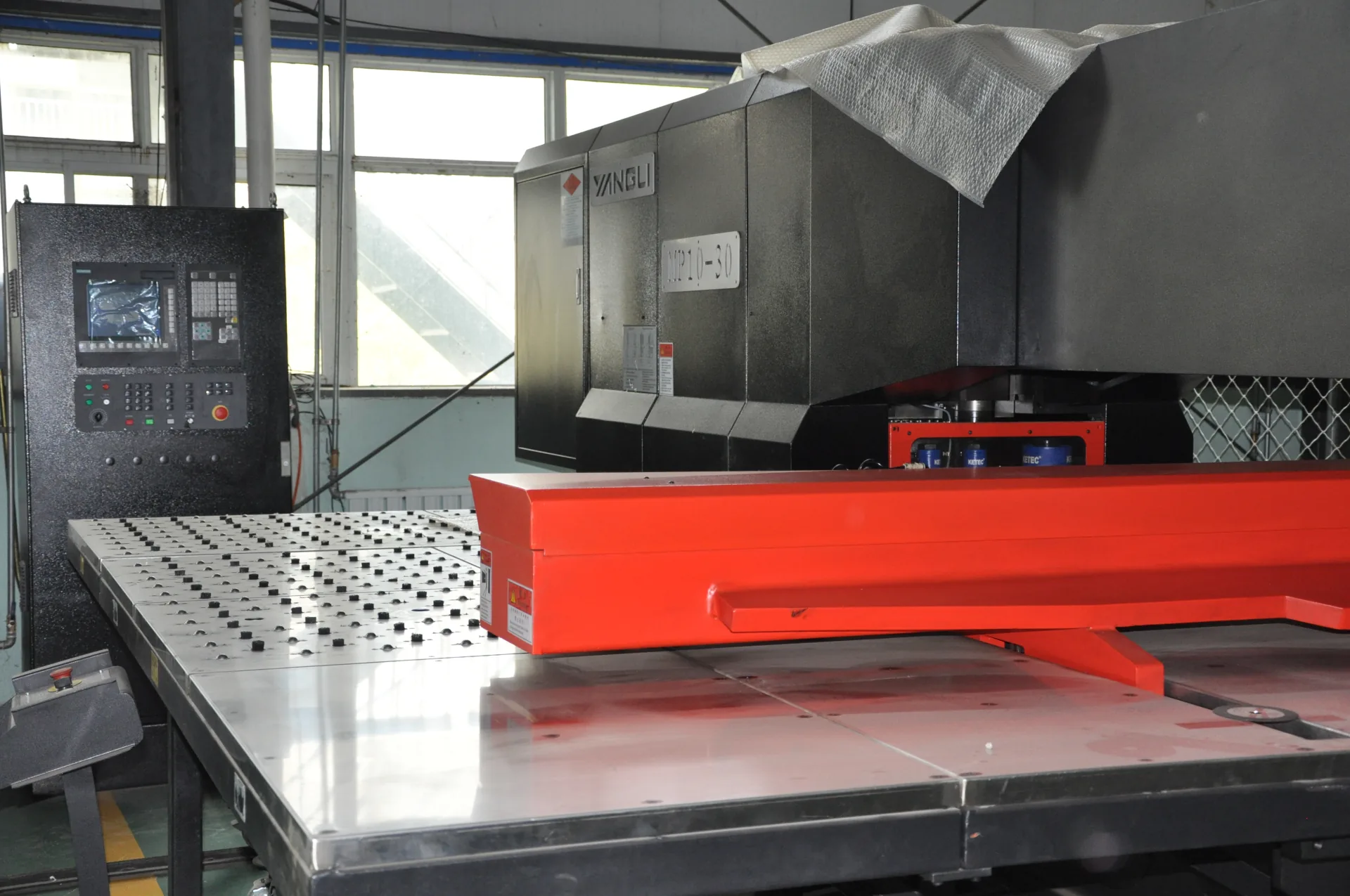
A CNC turret punch press and sheet-metal worktable inside a workshop.
Production equipment · Company archive

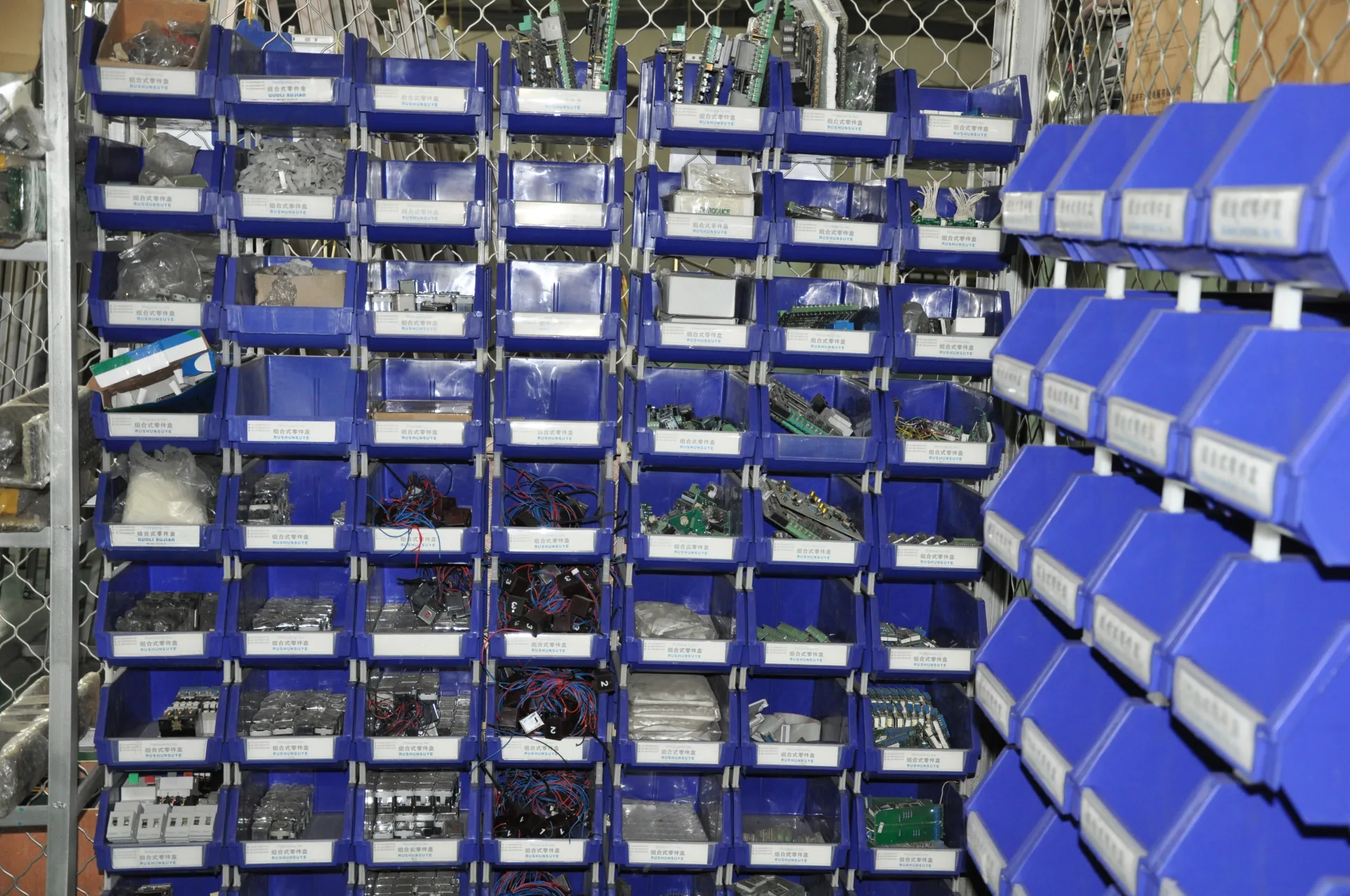
JAFITA’s company history and source materials identify freight-elevator production as a core strength and document OEM experience developed over many years. The available production imagery shows metal processing, machining, component assembly and organized production areas. That evidence supports the Manufacturing page and the direct freight/OEM foundation described here.

Labelled blue bins holding electrical parts, wiring and small components.
Component organization · Company archive

Other product categories can require different facilities, product platforms and certificates. For those projects, JAFITA coordinates with an appropriate specialist factory. The partner factory manufactures within its own approved scope and issues the corresponding product or manufacturing documents. JAFITA remains the commercial and technical coordination point where agreed, but does not relabel partner-factory capability as universal in-house production.

This is also why our Supply Chain work is technical, not merely commercial. A complete elevator depends on compatible structures, doors, controls, drives, traction equipment, guides, fixtures, safety components and documentation. The correct question is not whether a familiar brand name appears in the bill of materials. It is whether the exact component designation, interface, electrical data, revision and intended elevator unit are controlled together.

Requirements through handover

Quality is built through gates

Final inspection cannot repair a requirement that was never defined. JAFITA therefore treats quality as a sequence of gates:

Gloved hands measuring a rectangular metal section with a caliper
Measuring an identified characteristic · Technical illustration
  1. Requirement gate: the intended use, destination and required scope are recorded.
  2. Interface gate: building and equipment information is sufficiently complete for configuration.
  3. Approval gate: drawings, major options, finishes and responsibilities are accepted at an identified revision.
  4. Production gate: manufacturing and procurement proceed against the released configuration.
  5. Inspection gate: agreed characteristics, identification, documents and visible condition are checked.
  6. Release gate: open items are resolved or recorded with an agreed disposition before shipment.
  7. Handover gate: packages, manuals, drawings and project references can be passed to the receiving and installation teams.

The Quality Management and Inspection and Testing pages explain these controls separately. The former deals with how requirements, documents, changes and nonconformities are managed; the latter deals with what is actually checked and recorded for a particular order.

Read the document and its scope

Evidence that can be evaluated

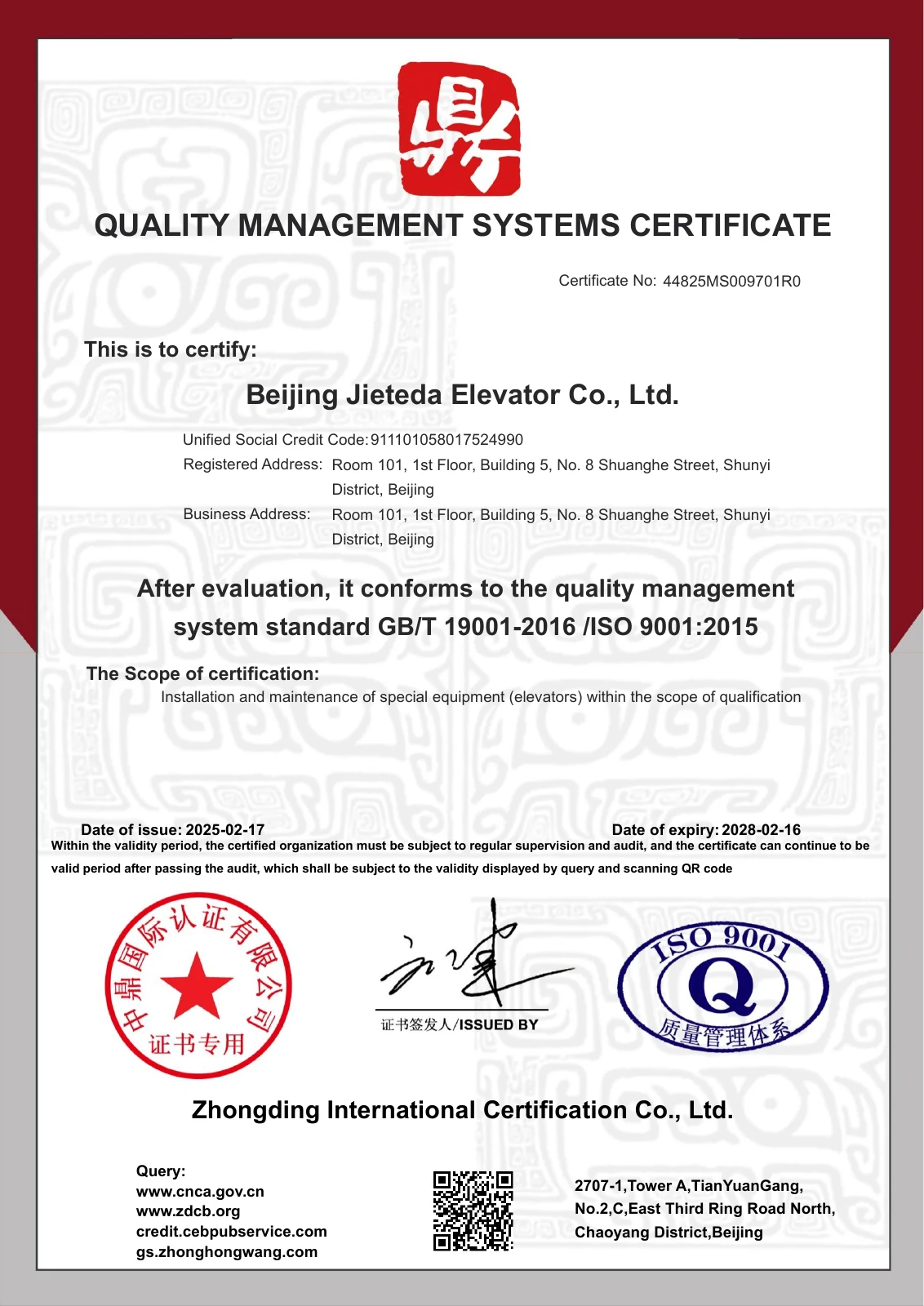
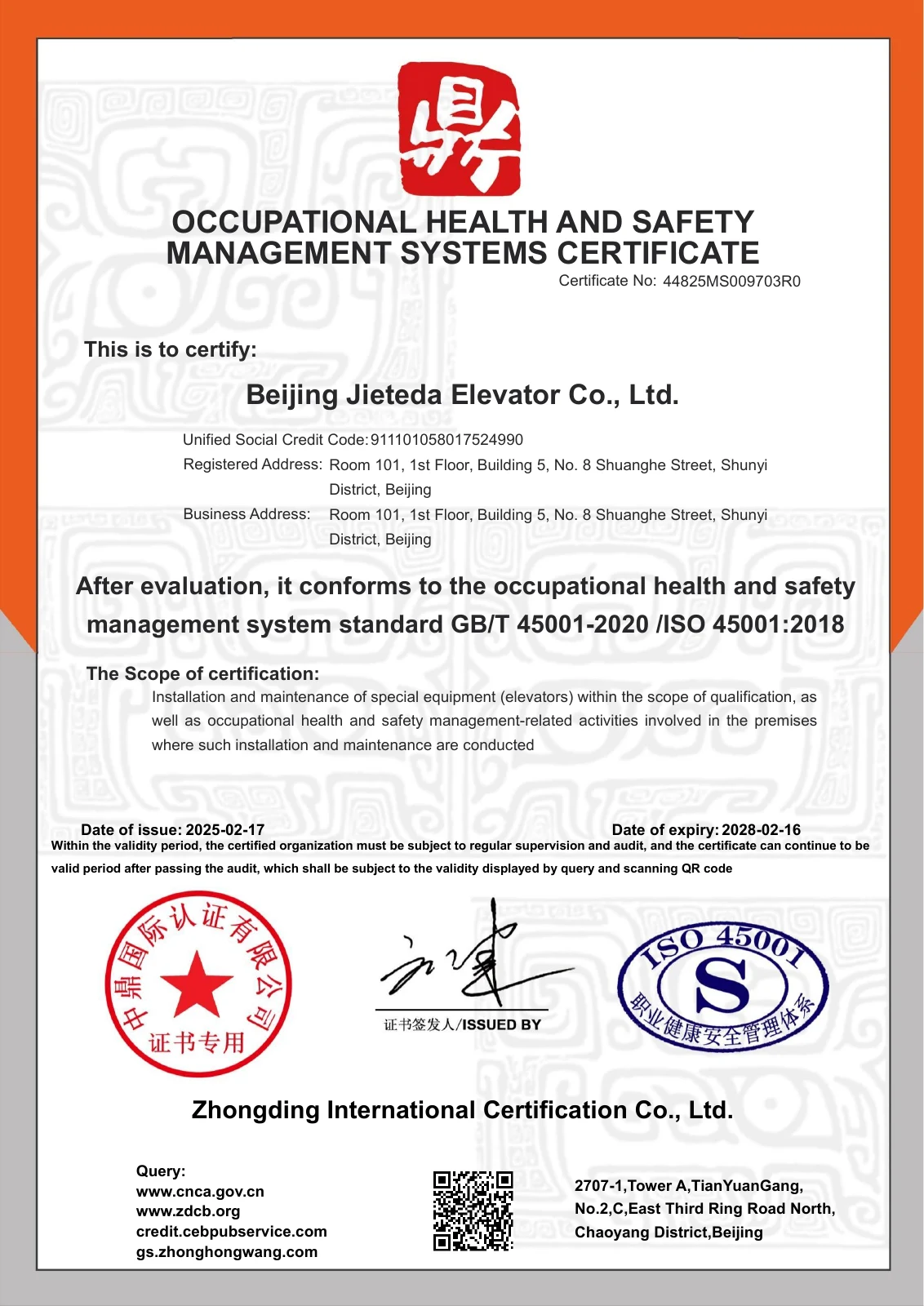
The strongest trust signal is evidence that retains its context. JAFITA’s available corporate records include current English-language certificates for ISO 9001:2015 and ISO 45001:2018 management systems. Both name Beijing Jieteda Elevator Co., Ltd.; both were issued on 17 February 2025 and state an expiry date of 16 February 2028, subject to the surveillance and verification conditions printed on the certificates. Their stated scope concerns elevator installation and maintenance within the company’s qualification scope, with the occupational health and safety certificate also covering related activities at the premises where that work is conducted.

Those precise details are more useful than a page full of certification logos. Our Certifications and Qualifications page explains how to distinguish a company certificate from a product certificate, a manufacturer qualification, a model-specific test report and a destination-market approval.

The source archive also includes JAFITA-branded installation guidance, control-system information and use-and-maintenance documentation for relevant equipment. These materials demonstrate the type of technical record that can support installation and service. They do not establish that the same manual applies to every product. The document package is matched to the equipment and order actually supplied.

English ISO 9001:2015 management-system certificate naming Beijing Jieteda Elevator Co., Ltd.
ISO 9001 · Complete archived certificate
English ISO 45001:2018 management-system certificate naming Beijing Jieteda Elevator Co., Ltd.
ISO 45001 · Complete archived certificate

What we need from a customer

A serious capability review is two-way. The customer or project team should provide information that allows the proposed supply to be evaluated:

Hands reviewing building drawings on a desk
Bring site information into the review · Illustrative context
  • Project country, site and building type
  • Equipment category and quantity
  • Intended use, users, goods or handling equipment
  • Travel, stops, entrances and duty expectations
  • Architectural and structural drawings, or verified existing-site measurements
  • Available shaft, pit, overhead and machine-space conditions
  • Power supply and required building interfaces
  • Required standards, approval route and document list
  • Installation, commissioning, inspection and maintenance responsibilities
  • Branding, finish, packaging or delivery requirements
  • Programme constraints and the status of site readiness

If information is missing, it should remain visible as an open item. An assumption may be used for an early discussion only when it is clearly labeled and later replaced by confirmed data before release.

Hands gesturing in a discussion beside a laptop, open notebook and phone
Clarifying a project brief · Illustrative context

What JAFITA delivers at capability-review stage

After reviewing the available information, JAFITA can identify the likely product route, the next technical inputs, the expected document set and the parties that need to confirm each interface. A mature early response may include questions rather than an immediate model recommendation. That is often a sign that the project is being examined as a system rather than reduced to load, speed and price.

For customers who are still comparing commercial proposals, the marketing site provides a separate, buyer-focused method for normalizing quotation scope. It helps expose exclusions, assumptions and incomparable line items before price is treated as a decision.

Questions about the scope

Capability questions customers commonly ask

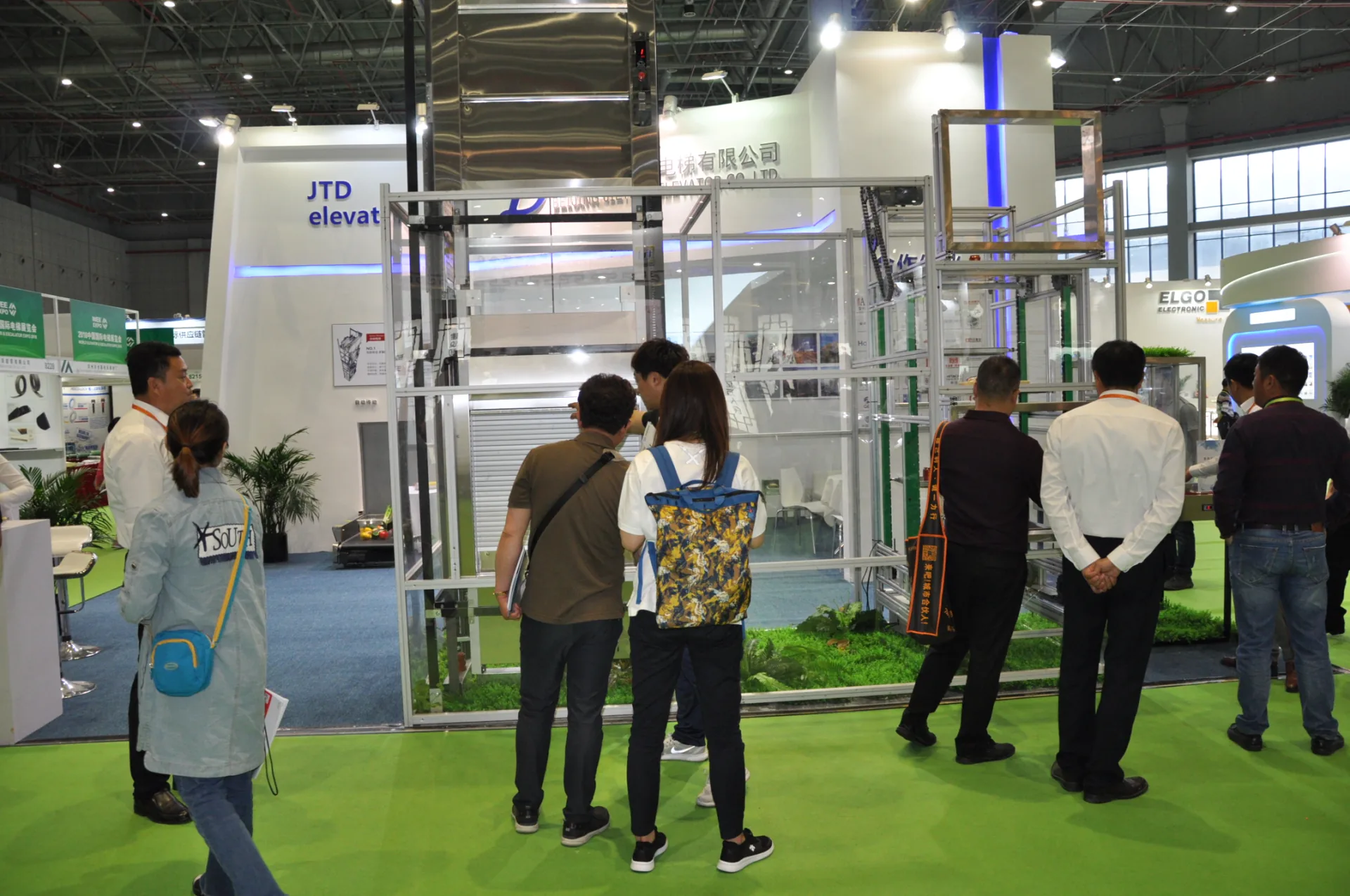
Visitors discussing a goods-lift demonstration at the Jieteda booth.
Discussing equipment · Company exhibition archive

Does JAFITA manufacture every product shown on the website?

No. JAFITA’s documented direct manufacturing foundation is freight elevators and related OEM work. Other complete elevators, escalators, moving walks and components may be supplied through specialist partner factories. The applicable manufacturing source is confirmed for the selected product and project.

Can one company certificate prove product compliance?

No. A management-system certificate describes the named organization’s management system and stated scope. Product compliance depends on the selected manufacturer, model, configuration, applicable standard and required approval route.

Can JAFITA support a project before all dimensions are available?

Yes, at a preliminary level. We can identify missing inputs and discuss a planning direction. Production and final technical commitments require approved project information at the appropriate revision.

Who is responsible for local installation and statutory acceptance?

The contract must identify the responsible parties. Work requiring local licenses, permits, inspection or statutory approval must be carried out by organizations and personnel authorized in the project jurisdiction. JAFITA can provide agreed documents and technical coordination without replacing those legal responsibilities.

How should a customer verify a capability claim?

Ask for evidence tied to the exact decision: a certificate with holder and scope, a drawing with revision, a component label with model, a test record with acceptance basis, or a packing list connected to the elevator unit. Context makes evidence useful.

Start with a project that can be defined

Send the application, destination, available drawings, expected equipment scope and the decisions already fixed. JAFITA will help separate confirmed requirements from open questions and identify whether the project belongs in the direct freight/OEM route or a specialist partner route.

Elevator displays beneath a circular ceiling light in the Beijing showroom
Beijing showroom